Understanding "SOT" in Broadcast Script Writing
In the realm of TV scriptwriting, "SOT" stands for "Sound on Tape," referring to audio clips from interviews or events used within broadcast stories. This term is crucial for understanding the integration of spoken content with visual elements in storytelling. For your extra credit assignment, compare print and broadcast narratives by examining provided story links. Analyze leads, visual elements, and storytelling orders to grasp their differences and similarities. This exercise enhances your skills in evaluating broadcast journalism and understanding scriptwriting techniques.

Understanding "SOT" in Broadcast Script Writing
E N D
Presentation Transcript
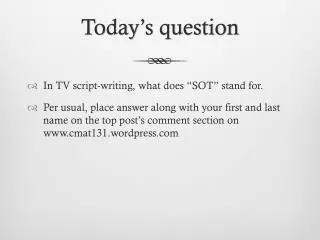
Today’s question In TV script-writing, what does “SOT” stand for. Per usual, place answer along with your first and last name on the top post’s comment section on www.cmat131.wordpress.com
Examining broadcast storytelling CMAT 131 Prof. Cox
How print and broadcast stories compare Time me. How long does it take me to read this print story: http://www.baltimoresun.com/news/maryland/bs-md-nclb-waiver-20120224,0,5301561.story What was the lead? How easy was it to understand on first pass? Was it “visual?”
Broadcast version This local broadcast version clocks in at 1:40 (after the intro): http://www.wboc.com/story/17030391/delmarva-schools-hope-to-receive-no-child-left-behind-waiver What was this story’s lead? Was it visual? What was similar? What was different?
Breaking down the story http://www.wmdt.com/category/201130/video?autoStart=true&topVideoCatNo=default&clipId=6785727 What order: SOT, OC, VO? Were the words written to the pictures? Do you write the words first or edit the video first?