DNA Structure and Discovery in Biology Class
120 likes | 140 Vues
Learn about the historical discoveries and structure of DNA, including nucleotide composition, Chargaff's rule, nucleotide base pairing, and the contributions of Rosalind Franklin, Watson, and Crick.


DNA Structure and Discovery in Biology Class
E N D
Presentation Transcript
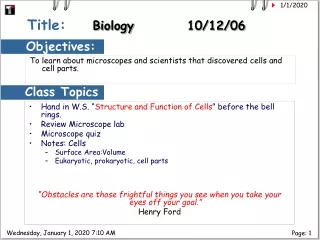
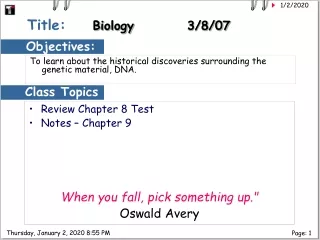
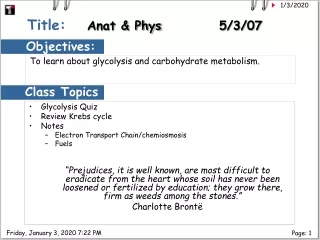
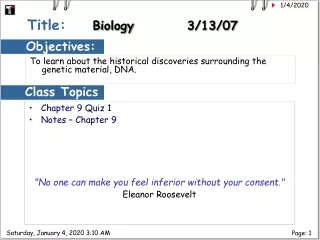
Chapter 9 Quiz 1 Notes – Chapter 9 "No one can make you feel inferior without your consent." Eleanor Roosevelt To learn about the historical discoveries surrounding the genetic material, DNA. Title: Biology 3/13/07 Class Topics Objectives: Saturday, January 4, 20203:10 AM
Class Assignments What By When • Chapter 9 Quiz 1 3/13/07 • W.S. Tuning in to Radioisotopes 3/15/07 • Read 194-200 3/15/07 • Due this class period • Due next class period • Due in the future
Grade Sheet 2A – p. 157 (5 pts.)
Postquiz Activities • Read 194-200 • Correct homework
DNA Structure • Monomer: Nucleotide • Sugar (5C) - deoxyribose • Phosphate group • Nitrogenous base • Adenine - purine • Guanine - purine • Cytosine - pyrimidine • Thymine - pyrimidine
Chargaff’s Rule • Erwin Chargaff - 1950 • Studied nucleotide composition of many DNA samples • Amount of each nucleotide differed in each sample • Amount of T = A and amount of G = C
Chargaff’s Data From: http://www.mun.ca/biochem/courses/3107/Topics/DNA_history.html
Nucleotide base pairing • Adenine bonds with thymine • 2 Hydrogen bonds • Cytosine bonds with guanine • 3 Hydrogen bonds
Rosalind Franklin • 1951 - X-ray diffraction • Maurice Wilkins • Suggested that DNA was two strands • Tightly coiled helix • Photo 51, flash
Watson and Crick • James Watson (American) and Francis Crick (British) discovered the shape and organization of DNA • Double helix • two strands • sugar/phosphate backbone • nitrogenous bases in middle • Won Nobel Prize for DNA model • with Maurice Wilkins