SlideServe
Menu
Préférences
© SlideServe · v2026

Modelling the rainfall-runoff process

tashya-powers avatar
12 diapositives · 1.4K Views · Nov 19, 2014

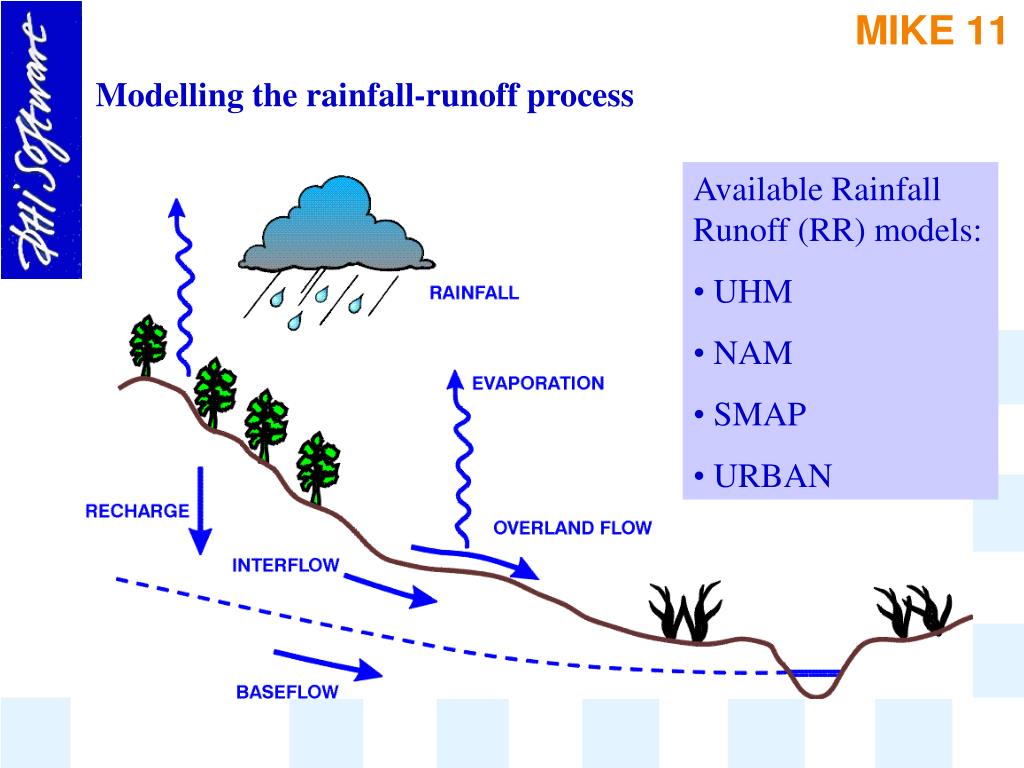
Modelling the rainfall-runoff process. Available Rainfall Runoff (RR) models: UHM NAM SMAP URBAN. RAINFALL POTENTIAL EVAPORATION. MODEL. PARAMETERS. RUNOFF COMPONENTS EVAPORATION RECHARGE. Modelling the rainfall-runoff process (NAM). NAM : “nedbør-afstrømnings model”.
Modelling the rainfall-runoff process - slide 1
01 / 12Modelling the rainfall-runoff process
1 / 17

Télécharger la présentation

Modelling the rainfall-runoff process
Une image / un lien ci-dessous est fourni (tel quel) pour télécharger la présentation

Politique de téléchargement : le contenu du site vous est fourni TEL QUEL pour votre information et votre usage personnel ; il ne peut être vendu, concédé sous licence ni partagé sur d’autres sites sans l’accord de son auteur.Le contenu vous est fourni TEL QUEL, pour votre information et votre usage personnel uniquement. Téléchargez la présentation en cliquant sur ce lien. Lors du téléchargement, si vous ne parvenez pas à télécharger une présentation, l’éditeur a peut-être supprimé le fichier de son serveur.Pendant le téléchargement, si vous ne parvenez pas à obtenir une présentation, le fichier a peut-être été supprimé par l’éditeur.

F I N

Plus de contenu associé

Transcription de la présentation
  1. Modelling the rainfall-runoff process • Available Rainfall Runoff (RR) models: • UHM • NAM • SMAP • URBAN

  2. RAINFALL POTENTIALEVAPORATION MODEL PARAMETERS RUNOFF COMPONENTS EVAPORATION RECHARGE Modelling the rainfall-runoff process (NAM)

  3. NAM : “nedbør-afstrømnings model” • Describes the land phase of the hydrological cycle • The NAM is a lumped, conceptual model: • lumped catchment regarded as one unit. • parameters are average values • conceptual based on considerations of the • physical processes • Similar models: Stanford, SSARR, HBV, SMAR,..

  4. General hydrological analysis - runoff distribution - estimates of infiltration / evaporation Flood Forecasting - subcatchment inflow to river model - links to meteorological models Extension of streamflow records - advanced gap-filling - improved basis for extreme value analysis etc. Prediction of low flow - for irrigation management - for water quality control Types of Application

  5. The NAM Model equations

  6. NAM, Initial conditions Data to be specified: • Initial Water Content of Surface and Root zone storages • Initial values for Overland flow and Interflow • Initial Groundwater Depth Recommended to disregard the first half year or so of the results to eliminate erroneous Initial Conditions!

  7. NAM, Model Calibration Most NAM Parameters of empirical nature=> values must be determined by Calibration: • Water balance in system • Runoff hydrographs, peak and shape • Comparison of Runoff results with observations Generally recommended to change only one parameter between each run !

  8. NAM, Model Calibration 1. Manual Step-by-step procedure (changing one variable at a time) 2. Autocalibration Automatic optimisation routine using multi-objective optimisation strategy. 4 objectives: 1) Overall Volume error (= water balance) 2) Overall root mean square error (= hydrograph shape) 3) average root mean square error of peak flow events 4) average root mean square error of low flow events Easy to use - BUT EVALUATION OF VARIABLE VALUES REQUIRED TO JUDGE HYDROLOGICAL SENSIBILITY

  9. NAM simulation, Liver creek

  10. RR Parameter editor • Editing of Model-specific parameters for Rural Catchments : • NAM Model-specific parameters comprise: • Surface, Root-zone and Snow melt data • Ground water data • Initial Conditions • Irrigated Area Editor-file: *.rr11

  11. RR Parameter editor (NAM) Example: Surface-Rootzone variables

  12. RR Input to HD Simulation Inclusion of Runoff results in River model: 1) RR-simulation (produce RR Result-file) 2) Specify Catchment definitions in Network Editor (input to single points or distributed along reach) 3) Specify RR Result-filename in Simulation Editor