Download
1 / 4
40 likes | 171 Vues
This chapter delves into how plants respond to various stimuli through tropisms, with positive tropism directing growth toward stimuli like light (phototropism) and negative tropism leading to growth away from forces like gravity (gravitropism). It also explores photoperiodism, highlighting how short-day and long-day plants adapt their flowering cycles to the length of daylight. Additionally, it discusses plant dormancy, which aids survival in harsh conditions, and emphasizes the vital role of plants in sustaining environments and human life by providing food, oxygen, and materials.

E N D
Plant Responses, Growth, & Import Chapter 3 Lessons 5 & 6
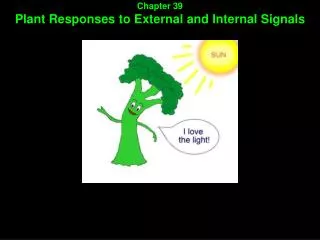
1. Tropism – a plant’s growth in response to a stimulus • Positive tropism – growth is toward the stimulus • Ex. Plant growing toward the light (phototropism) • Negative tropism – growth is away from the stimulus • Ex. Plant growing away from gravity (gravitropism) What are the stimuli that produce plant responses?
1. Photoperiodism • Short day plants – flower when the days are short • Long day plants – flower when the days are long 2. Dormancy • Helps plants survive freezing temperatures and the lack of liquid water • Ex. Deciduous trees – drop their leaves How do plants respond to Seasonal Changes?
1. Environment • Habitats for animals, food, oxygen, clean water, hold soil in place 2. Humans • Food, clothing, building materials, fuel How are plants important to everyday life?