Understanding Neuron Communication: Axons, Dendrites, and Neurotransmitters
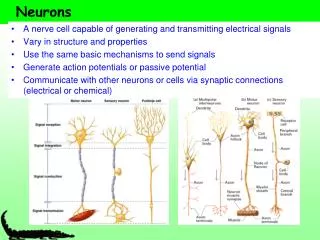
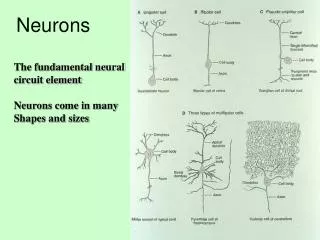
Neurons communicate via complex mechanisms involving axons, dendrites, and neurotransmitters. When neurotransmitters bind to receptor sites on dendrites and the cell body, they cause the cell membrane to become permeable, allowing sodium ions to flow in. This influx creates a positive charge, enabling the neuron to reach a threshold. As the signal travels down the axon, sodium ions continue to move in, ultimately reaching the terminal branches. Here, neurotransmitters are released into the synapse, facilitating communication between neurons.

Understanding Neuron Communication: Axons, Dendrites, and Neurotransmitters
E N D
Presentation Transcript
A. Axon B. Dendrites C. Neurotransmitters D. Sodium ions E. Terminal branches Chemical messengers called neurotransmitters enter receptor sites on the dendrites and cell body. This causes the cell membrane to open up and sodium ions to flow in. When there is enough of a positive charge, the neuron reaches threshold, and the first section of the axon opens up and sodium ions flow in. This exchange of sodium ions happens down the length of the axon. When the signal reaches the terminal branches at the end of the axon, neurotransmitters flow out into the empty space called the synapse.