Explore Categorical Data
Yesterday’s team tryouts yielded impressive results as team members displayed their coin-flipping skills. Congratulations to Bailey, Jodie, Kyle, Ryan, Duncan, Joshua, Nick, and Ella for their outstanding performance! This statistical study examines whether those cut from the team showed different abilities in coin flipping, investigates the outcomes of extensive trials, and explores key variables that influence success in various sports. Our analysis will consider both categorical and numerical data to understand the factors that contribute to being a good player in multiple sports.

Explore Categorical Data
E N D
Presentation Transcript
Explore Categorical Data Variables
Results from Coin-Flipping Team Tryouts Yesterday’s tryouts went very well. Congratulations to the following team members: Bailey Jodie Kyle Ryan Duncan Joshua Nick Ella
Few Questions • Were the people who were cut really worse at flipping coins? • What would happen if we let each athlete flip the coin a thousand times? Let’s say a player’s ABILITY to flip a coin and it landing on heads is 60%. • If the player flips the coin10 times, would it be unreasonable for her to land on heads only 3 times? • How about all 10 flips?
Statistical Study A Statistical Study involves the following process: 1. Hypothesis 2. Collect data 3. Analyze data 4. Conclusion
What makes a good player? • Baseball: • Basketball: • Golf: • Soccer: • Cross Country: • Tennis: • Football:
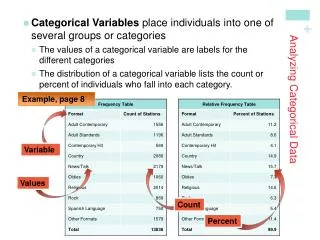
Variables A variable is something that can change. It is included in the hypothesis part of the statistical study. • Free throws • Home runs • Yards gained • Touch downs
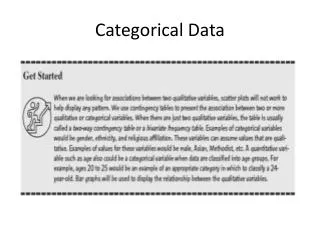
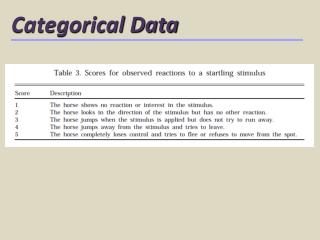
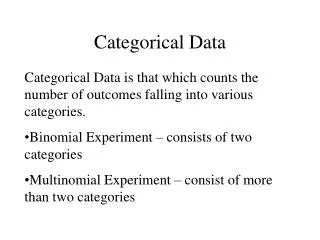
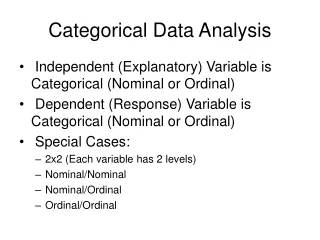
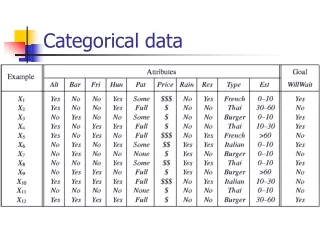
Data Numerical data: The data of a variable can be either numerical or categorical. quantitative • number of home runs • number of points scored • number of yards gained Categorical data: can be sorted into categories / groups • making / not making a free throw • winning / loosing a game • number of bases (at-bat) We’ll be working with variables for a while. categorical