Exploring Estonian School Levels and Compulsory Subjects
This article delves into the structure of Estonian education, outlining the four key school levels: Level I (grades 1-3), Level II (grades 4-6), Level III (grades 7-9), and Level IV (upper secondary, grades 10-12). At Level II, students engage in essential subjects including Estonian language, mathematics, foreign languages, and the arts. Additionally, the curriculum incorporates important cross-curricular themes such as lifelong learning, cultural identity, and innovation. Emphasizing creativity, the article encourages brainstorming and the exploration of diverse ideas in educational settings.

Exploring Estonian School Levels and Compulsory Subjects
E N D
Presentation Transcript
Estonian school levels/stages: • Level I (grades 1-3) • Level II (grades 4-6) – aged 10-13 • Level III (grades 7-9) • Level IV (upper-secondary school – grades 10-12)
Compulsory subjects at Level II: • Estonian language and literature • 1-2 foreign languages (English, Russian, German) • mathematics • nature study • history • human studies • art • handicraft • music • physical education + some elective subjects (e.g. computer studies)
Compulsory cross-curricular themes: • lifelong learning and career planning; • active citizenship and entrepreneurship; • cultural identity; • environment and sustainable development; • technology and innovation; • health and safety; • information environment; • values and morality
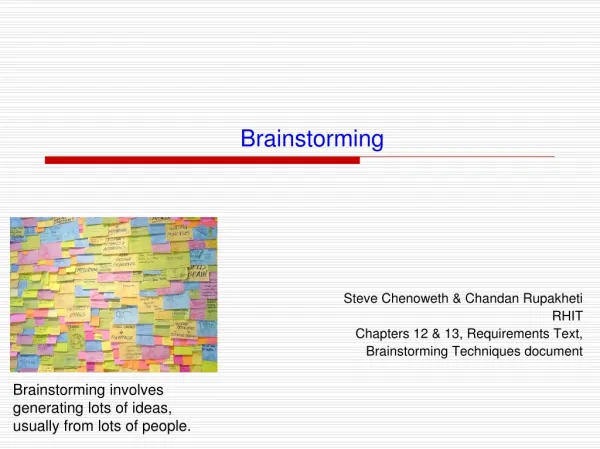
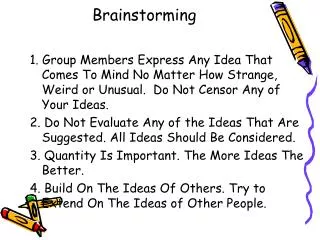
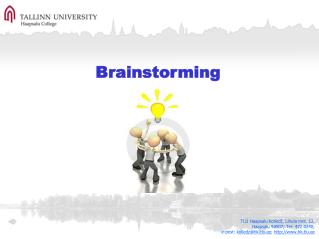
Come up with lots of ideas — the more, the better. • Don't eliminate ideas as being too difficult, strange or expensive. Just let your imagination run free. You can criticize the ideas later. • Look for unusual ideas.