Social Challenges in Medical Biotechnology Education: Insights from Hungarian Universities
140 likes | 302 Vues
This study explores the integration of novel social challenges facing the European Union into the teaching materials of Medical Biotechnology Master's Programmes at the University of Pécs and the University of Debrecen. By examining the relevance of issues such as healthcare policies and bioethics in medical education, the paper highlights the importance of adapting curricula to better prepare students for contemporary societal needs. The findings emphasize how academic institutions can contribute to addressing these challenges through innovative educational approaches.


Social Challenges in Medical Biotechnology Education: Insights from Hungarian Universities
E N D
Presentation Transcript
Manifestation of Novel Social Challenges of the European Unionin the Teaching Material ofMedical Biotechnology Master’s Programmesat theUniversity of Pécs and at the University of Debrecen Identificationnumber: TÁMOP-4.1.2-08/1/A-2009-0011
Manifestation of Novel Social Challenges of the European Unionin the Teaching Material ofMedical Biotechnology Master’s Programmesat theUniversity of Pécs and at the University of Debrecen Identification number: TÁMOP-4.1.2-08/1/A-2009-0011 Tímea Berki and Ferenc Boldizsár Signaltransduction Ion channelreceptors
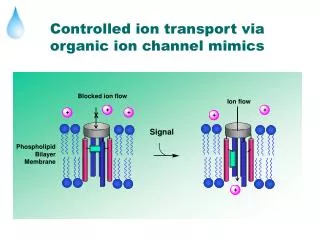
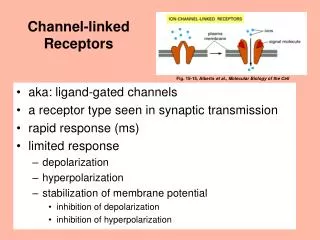
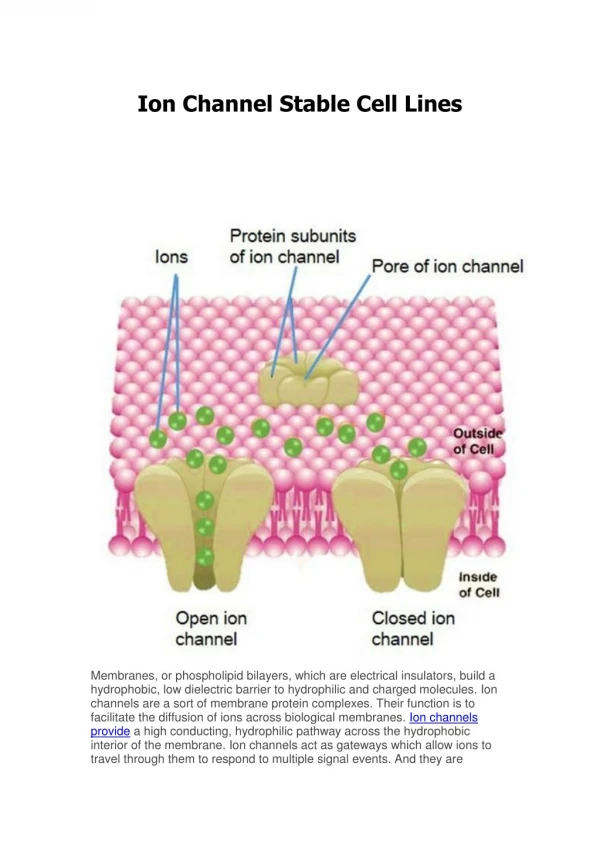
Ion channel receptors • 1Cys-loop receptors:pentameric structure, 4 transmembrane (TM) regions/subunit • Acetylcholin (Ach) Nicotinic R – Na+ channel • GABAA, GABAC, Glycine – Cl- channels (inhibitory role in CNS) • 2Glutamate-activated cationic channels: (excitatory role in CNS),tetramericstucture, 3 TM regions/subunit • eg. iGlu • 3ATP-gated channels: 3 homologous subunits, 2 TM regions/subunit • eg. P2X purinoreceptor
Cys-loopion-channelreceptors Pore C C N N N N N C C C TM 1 TM 2 TM 3 TM 4 b a Receptor type GABAA GABAC Glycine g p2 p1 a b Subunitdiversity a1-4, b a1-6, b1-3, g1-3, d,e,k, and q p1-3
Nicotinic Ach receptor • Pore formed from 5 subunits: 2a, b, g, d • Opening: the 2a units are distorted • Desensitization: in the open conformation the b, g, d subunits become phosphorylated by Protein kinase A and C Top Front
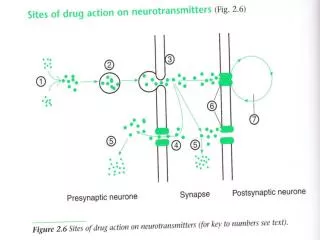
Synapsebetweentwoneurons - neurotransmission Presynaptic neuron (axonterminal) Synapticvesicles NT transporter Voltage-gatedsodiumchannel + Neurotransmittermolecule Ligand-gated ion channel (directexcitationorinhibition) Postsynaptic neuron GPCR (modulatory) +
Neurotransmission Neurotransmitter Ions Plasma membrane Cytoplasm g a Ion channel b Neurotransmitter Receptor Plasma membrane Cytoplasm Effector protein Intracellular messengers a GTP GTP G-protein is activated G-protein subunits or intracellular messengers modulate ion channels
Neurotransmitters Acetylcholine m/i Acetylcholine(motor neurons) Indolamines m/i Serotonin(memory, emotion) Monoamines Dopamine (motivation, addiction) m Catecholamines m Norepinephrine/Noradrenaline(sympathetic NS) m Epinephrine Glutamate(most prominentin CNS, excitatory) m/i m/i GABA (30%-40% of CNS synapses, inhibitory) AminoAcids i Aspartate Glycine(can be excit. orinhib. dependingon Cl-conc.) * i m Adenosine m Guanosine Purines i/m ATP Others Endorphins Opioids Enkephalins Dynorphins Neuropeptides Substance P Non-opioids m Neuropeptide Y Others NO Solublegases CO
Nicotinicmuscle Nicotinic Junctional [(a1)2bed] Acetylcholinereceptors Phenyltrimethyl-ammonium Nicotinic Embyonic [(a1)2bgd] Elapid a-toxins, d-Tubocurarine Nicotinic Neuronal a2 (a-toxin insensitive) Nicotinic Nicotinic Neuronal b2 Nicotine Stage 1 Stage 2 Stage 3 Nicotinic Neuronal a3 (a-toxin insensitive) d-Tubocurarine Nicotinic Neuronal b3 Nicotinic Neuronal a4 (a-toxin insensitive) Nicotinicneuronal (a+b) Nicotinic Neuronal b4 Dimethylphenyl-piperazinuim, Cystine Nicotinic Neuronal a5 (a-toxin insensitive) Trimethaphan Neuronal bungarotoxin Nicotinic Neuronal b5 Nicotinic Neuronal a5 (non-functional without a subunits) Nicotinic Neuronal a6 (a-toxin insensitive) Cholinergic Nicotinic Neuronal a7 (a-toxin sensitive) Acetylcholine Nicotinic Neuronal a8 (a-toxin sensitive) Nicotinic Neuronal a9 Muscarinic m1-M1 Pirenzepine Muscarinic Muscarinic m2-M2 Methoctramine Muscarine, Pilocarpine Oxotremorine Muscarinic m4-M4 Himbacine Atropine Propyllbenzilylcholine mustard Quinuclidinyl benzilate Muscarinic m3-M3 Hexahydro-siladifenidol Muscarinic m5-M5
Acetylcholin-esterase (AchE): • Quick removal of Ach from the synaptic space • Ach→ choline+acetyl • Reversible inhibitors:therapeutic use (myasthenia, glaucoma, Alzheimer’s) • Irreversible inhibitors: chemical weapons and pesticideseg. organophosphates Ach AchE