The Impact of New Imperialism in the Congo: From King Leopold to Belgian Rule
This analysis explores the dynamics and consequences of New Imperialism in the Congo during the late 19th century, focusing on King Leopold II’s acquisition of territory and the establishment of the Congo Free State. It examines the military, economic, and cultural factors that facilitated Belgium's exploitation of Congolese resources, particularly rubber. The study highlights the violent repression inflicted by the Force Publique, the international outcry over human rights abuses, and the long-term repercussions on Congolese society, including loss of local traditions and contributing factors to future conflicts.

The Impact of New Imperialism in the Congo: From King Leopold to Belgian Rule
E N D
Presentation Transcript
Imperialism • A policy or belief in the creation of an empire by acquiring colonies • By military campaigns • By economic domination • By cultural domination
New Imperialism • Stanley negotiated 450 treaties during exploration of the Congo 1879-84 • Gave Leopold trading and land rights • The use of trade to win control/influence over an undeveloped region
The scramble for Africa • Late 19th C - most of the world divided between European imperial powers • The only uncolonised region – unexplored Africa • 1884-85 Berlin Conference – • Great Power rivalry
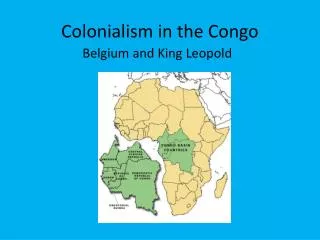
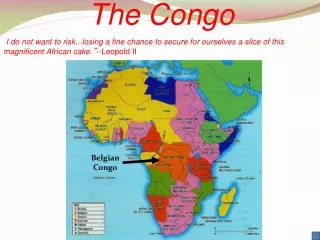
Berlin Act 1885 • Commerce – free trade • Christianity – missionaries protected • Civilization – end slavery • Aim – avoid conflict between European powers • Granted Leopold right to Central Africa – one million square kilometers • He created the Congo Free State
So what gave Belgium power? • The Force Publique– a native army of less 16,000 natives, around 400 Belgian officers • Superior weapons • Congolese tribes disunited • Kidnapping and hostage taking • Greed – bribed some chiefs
What motivated King Leopold? • Profits from rubber • Racial superiority – “white man’s burden” • 1890s – new technology – the pneumatic tyre (a Scotsman, Dunlop, invented the rubber tyre for his son’s bicycle) • Labor needed to harvest wild rubber plants in the Congo • Congolese are “taxed” – with labor
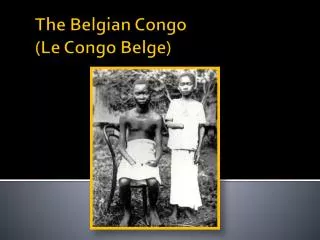
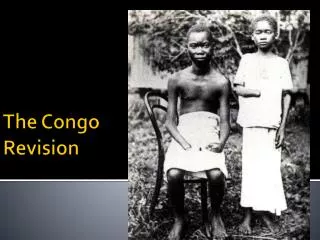
What was the impact on the Congo? • Force Publiqueterrorised Congolese tribes • Rebellion – many refuse to harvest rubber vine forests • Hostages taken to force men to work • Rebels killed or mutilated
Short Term Consequences • E D Morel’s campaign (CRA) damages King Leopold’s international reputation • Casement Report provides credible and damning support for Congo Reform Association claims • 1908 Leopold forced by public pressure to sell Congo to Belgian government
Long term consequences • Loss of local religions and customs • Schools and churches spread Christianity and European idea • Most of the population speak French • The borders devised by the Berlin Conference paid little heed to tribal borders • Few industries – just exploitation of natural resources • Congo is a mix of tribes competing for resources – one reason for civil war in 1990s
Comparison with China • Europeans had superior weaponry • Berlin Conference and Treaty of Tianjin gave protection for missionaries • Co-operation between European powers (Berlin Conference, Opium Wars, Boxer Rebellion) • Economic motivation – free trade, access to new raw materials, role of opium/rubber • Cultural destruction – threats to local religion and identity
Contrast with Japan • Civil war in both countries – but the Japanese were ethnically homogeneous and united under one Emperor • Congo – many tribes and chiefs. No unified army • Japanese controlled changes to their society – revolution from above • Belgians controlled change in Congo