THE PASSIVE VOICE
Explore the intricacies of the passive voice in Latin through a structured overview. This guide covers essential topics including the definition of the passive voice, verb endings across all four conjugations, and comparisons between active and passive constructions. Learn how the subject is acted upon by the verb and the various forms in which passive verbs appear, including present and imperfect tenses. With examples, you will gain a clear understanding of how to use and identify passive constructions in Latin effectively.


THE PASSIVE VOICE
E N D
Presentation Transcript
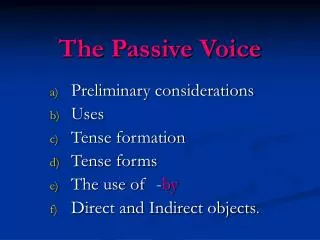
Table of contents • 1 What is the passive voice? • 2. The passive endings • 3. First conjugation • 4. Second conjugation • 5. Third conjugation • 6. Fourth conjugation
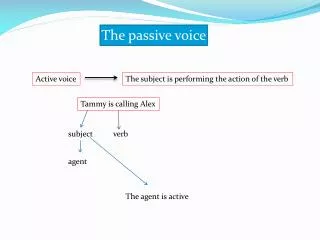
In the active voice, the subjectPERFORMS THE ACTION of the verb.
In the passive voice, the subject is ACTED UPON by the verb.
In Latin, there are special endings to show that the verbs are in the passive voice!
First conjugation long “a” verbs
portor portāris portātur portāmur portāmini portantur portare--passive voice
Second conjugation long “e” verbs
teneor tenēris tenētur tenēmur tenēmini tenentur tenere--passive voice
Third Conjugation the short E verbs
ducor duceris ducitur ducimur ducimini ducuntur ducere--passive voice
Third Conjugation -io verbs
capior caperis capitur capimur capimini capiuntur capere--passive voice
Fourth Conjugation long “i” verbs
audior audīris audītur audīmur audīmini audiuntur audire--passive voice
Now, let’s look at some active and passive verb situations: