SlideServe
Menu
Préférences
© SlideServe · v2026

Renaissance Humanism: Transforming Thought and Society through Christian Ideals

travis avatar
17 diapositives · 305 Views · Aug 04, 2014

The Northern Renaissance was marked by Christian Humanism, emphasizing early Church writings that sought to improve society and reform the Church. Key figures included Erasmus, who critiqued Church immorality, and Thomas More, who envisioned a utopian society in "Utopia." Other notable humanists like Jacques Lefevre d'Étaples and Francesco Ximenes de Cisneros promoted biblical scholarship, while writers like Rabelais and Montaigne enriched secular literature. This movement fostered critical thought, ultimately playing a vital role in the lead-up to the Reformation.
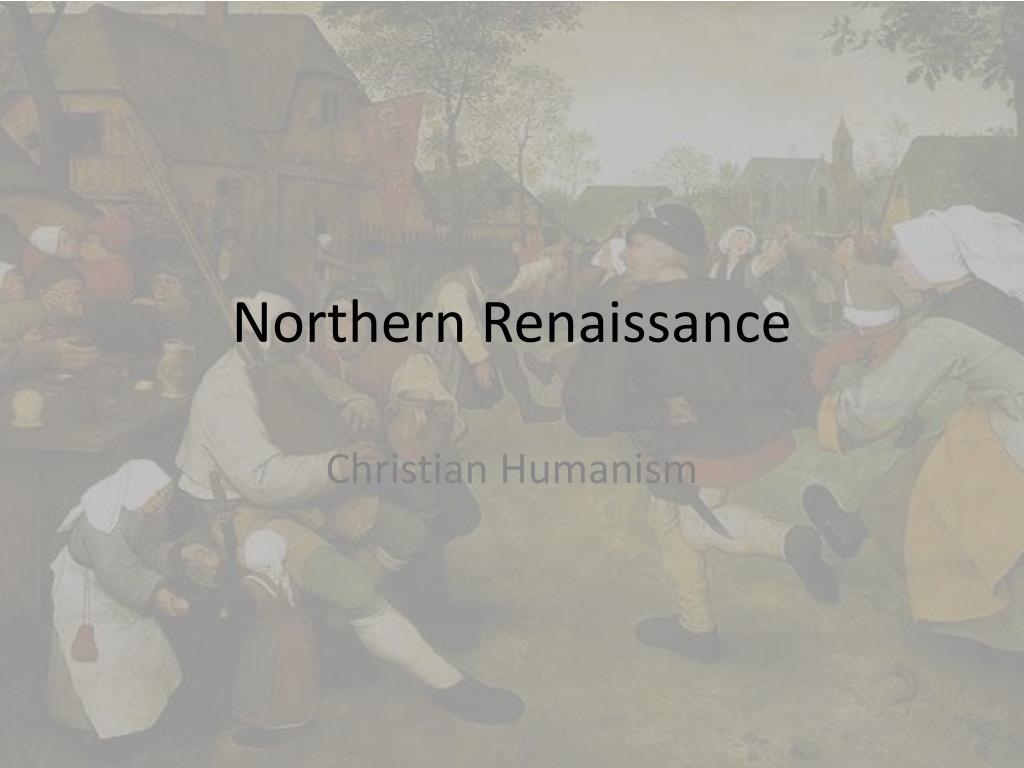
Renaissance Humanism: Transforming Thought and Society through Christian Ideals - slide 1
01 / 17Renaissance Humanism: Transforming Thought and Society through Christian Ideals
1 / 17

Télécharger la présentation

Renaissance Humanism: Transforming Thought and Society through Christian Ideals
Une image / un lien ci-dessous est fourni (tel quel) pour télécharger la présentation

Politique de téléchargement : le contenu du site vous est fourni TEL QUEL pour votre information et votre usage personnel ; il ne peut être vendu, concédé sous licence ni partagé sur d’autres sites sans l’accord de son auteur.Le contenu vous est fourni TEL QUEL, pour votre information et votre usage personnel uniquement. Téléchargez la présentation en cliquant sur ce lien. Lors du téléchargement, si vous ne parvenez pas à télécharger une présentation, l’éditeur a peut-être supprimé le fichier de son serveur.Pendant le téléchargement, si vous ne parvenez pas à obtenir une présentation, le fichier a peut-être été supprimé par l’éditeur.

F I N

Plus de contenu associé

Transcription de la présentation
  1. Northern Renaissance Christian Humanism

  2. Christian Humanism • Emphasis on early Church writings that provided answers on how to improve society and reform the Church • Less emphasis on pagan works from ancient Greece and Rome

  3. Texts • Drew on Hebrew and Greek texts of the Bible and the writing of the Church Fathers

  4. Education • Emphasized education and power of human intellect to bring about institutional change and moral improvement

  5. Writings • New writings led to criticism of the church thus leading to the Reformation

  6. Erasmus • 1466-1536 • Most famous and celebrated of all northern humanists • Master of the Greek language • Made new translations of the Greek and Latin versions of the New Testament to create ‘purer’ editions • First humanist to earn a living by writing

  7. Erasmus

  8. Erasmus • In Praise of Folly (1513) • Best-seller (only the bible sold more by 1550) • Devout Catholic who sought to reform the Church, not destroy it • Criticized immorality and hypocrisy of Church leaders and the clergy • The book inspired renewed calls for reform, and influenced Martin Luther • “Erasmus lay the egg that Luther hatched”

  9. Thomas More • 1478-1536 • Prime example of a civic humanist • He rose to the highest government position of any humanist • Lord Chancellor to King Henry VIII in England

  10. Thomas More • Utopia (1516) • Mixes civic humanism with religious ideals to describe the perfect (utopian) society located on an imaginary island • More sees the accumulation of property as a root cause for society’s ills • In order to achieve harmony and order people have to be willing to sacrifice their individual rights and common good • War, poverty, religious intolerance, and other problems of the early 16th century do not exist

  11. Jacques Lefevred’Etaples • 1454-1536 • Leading French humanist and focused on early Church writings • Produced 5 versions of the Psalms that challenged a single authoritative version of the Bible • A devout Catholic, he later was seen as an enemy of the Church and was condemned for heresy

  12. Francesco Ximenes de Cisneros • 1436-1517 • Spanish humanist who reformed the Spanish clergy and church so that many of the Church abuses that were highlighted during the Reformation did not apply to Spain

  13. Francesco Ximenes de Cisneros • Complutensian Polyglot Bible • Placed Hebrew, Greek, and Latin versions of Bible in parallel columns • Another example of Northern Humanist using early Church writings

  14. Francois Rabelais • 1494-1553 • His secular writings portrayed his confidence in human nature and reflected Renaissance tastes • Gargantua and Pantagruel • 1532-1542 • Folk epic and comic masterpiece that mocked French society • Attacked clerical education and monastic order, championing secular learning

  15. Michel de Montaigne • 1533-1592 • Developed essay form • The essay became a vehicle for testing new ideas • Skepticism • Doubt that true knowledge could be obtained • Believed that the skeptic must be cautious, critical, and suspend judgment • Thus, one must be tolerant of others’ views

  16. William Shakespeare • 1564-1616 • Greatest of the English Renaissance authors • His works reflected the Renaissance ideas of classical Greek and Roman culture, individualism, and humanism • Wrote comedies, tragedies, histories, and sonnets

  17. Miguel de Cervantes • 1547-1616 • Don Quixote • 1605-1615 • Among the greatest pieces of Spanish literature • Critical of excessive religious idealism chivalric romance