Download
1 / 10
100 likes | 218 Vues
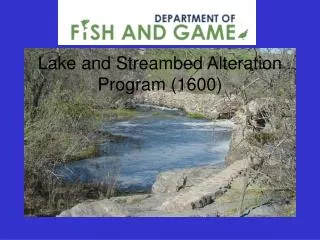
Under California Fish and Game Code (F&GC) §1600, any project that substantially diverts or obstructs natural water flows, alters streambed materials, or involves the deposit of waste into riverbanks and water bodies requires notification. The jurisdiction focuses on conserving fish, wildlife, and their habitats. Projects must be assessed for potential adverse effects on aquatic life. Emergencies warrant immediate notification within 14 days. Understanding these requirements is crucial for compliance and protecting aquatic ecosystems.

E N D
Notification Required F&GC § 1600 • Notification is required for any project that will: • substantially divert or obstruct the natural flow; • substantially change or use any material from; • deposit or dispose of waste where it may pass into the bed, channel, or bank of any river, stream, or lake
Definitions • F&GC § 1802 • The department has jurisdiction over the conservation, protection, and management of fish, wildlife, native plants, and habitat... • F&GC § 45 • “Fish” means wild fish, mollusks, crustaceans, invertebrates, or amphibians, including any part, spawn, or ova thereof.
Definitions • 14 CCR § 1.72 • A stream is a body of water that flows at least periodically or intermittently through a bed or channel having banks and supports fish or other aquatic life. This includes watercourses having a surface or subsurface flow that supports or has supported riparian vegetation.
Definitions • “Substantial” • No definitions in legal opinions or case law • Whether the action/project could “adversely affect” fish or wildlife resources
Emergencies • “Emergency” means a sudden, unexpected occurrence, involving a clear and imminent danger, demanding immediate action to prevent or mitigate loss of, or damage to, life, health, property or essential public services. • Entity conducting work must notify within 14 days