Feasibility of a 200g Balloon Launch using Saturn V Trajectory Analysis
This presentation explores the feasibility of launching a 200g payload using a trajectory design based on the Saturn V rocket. It includes detailed analysis of delta-v requirements, drag profiles, mass profiles, and thrust parameters, as well as the necessary equations derived from established aerospace engineering principles. The data generated from the trajectory code offers insights into the optimal launch parameters. This work is based on rigorous analysis as presented in the Space Propulsion, Analysis, and Design textbook by Humble et al.

Feasibility of a 200g Balloon Launch using Saturn V Trajectory Analysis
E N D
Presentation Transcript
Scott BreitengrossMar 27, 2008Trajectory group, Delta V, Saturn V, Feasability Determination, 1 kg Final Design Final Presentation AAE 450 Spring 2008
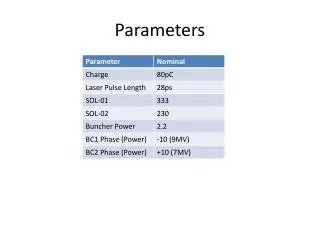
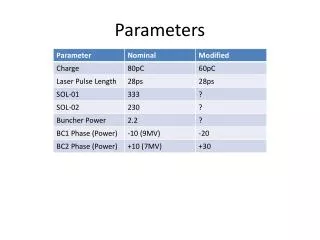
200g Balloon Launch Parameters Tables generated from trajectory code output data AAE 450 Spring 2008 Trajectory
ΔV Equations • Where μ is the gravitational constant and Rp is the Radius of the periapsis from the center of the earth • Where D(t) is the drag profile and m(t) is the mass profile • Where g(t) is the gravity profile and γ(t) is the flight path angle • Where Reis the radius of the Earth, φ is the launch latitude, and td is time in a day in seconds *all equations generated in Space Propulsion, Analysis and Design Book.
200g Additional Data Orbit and model generated by trajectory code
Where T(t) is the Thrust profile and m(t) is the mass profile References: Humble, Ronald W., Henry, Gary N., Larson, Wiley J., Space Propulsion Analysis and Design. The McGraw-Hill Companies Inc. St. Louis, Missouri, 1995.