SlideServe
Menu
Préférences
© SlideServe · v2026

Unit 19: Natural Disasters pt 1

ulema avatar
23 diapositives · 1.2K Views · Jul 29, 2014

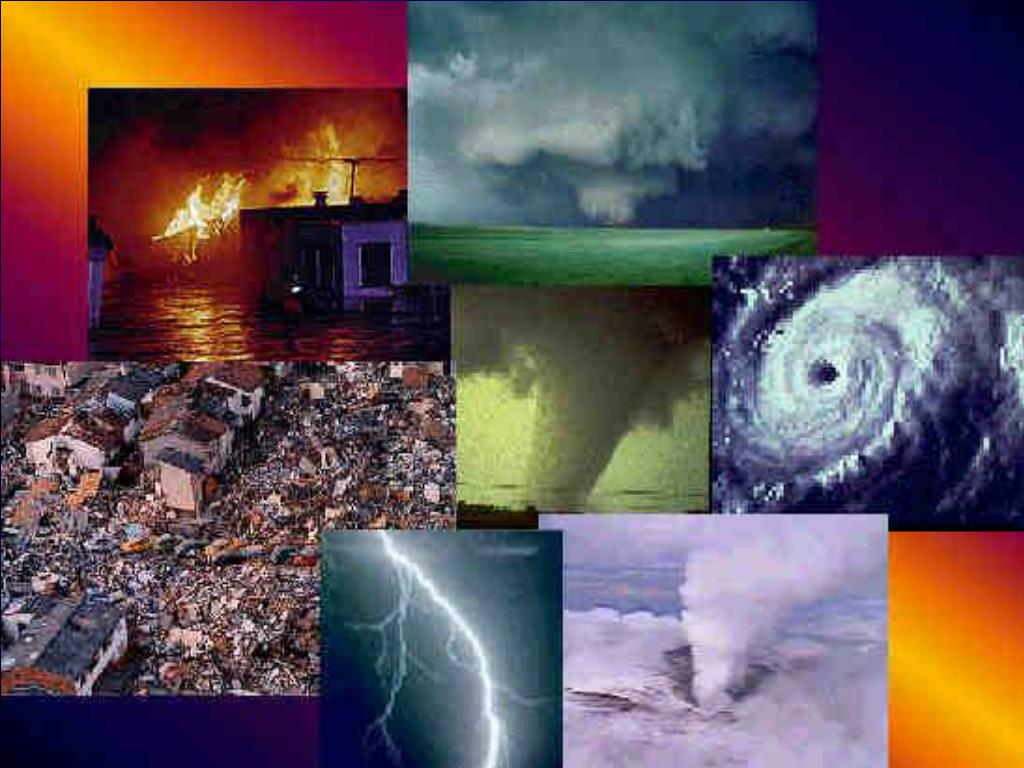
Unit 19: Natural Disasters pt 1. NATURAL DISASTERS. An event that occurs naturally and affects the earth’s surface and environment Man made disasters occur as a result of human error and or accidents. NATURAL DISASTERS. Can be land, water or weather disasters
Unit 19: Natural Disasters pt 1 - slide 1
01 / 23Unit 19: Natural Disasters pt 1
1 / 17

Télécharger la présentation

Unit 19: Natural Disasters pt 1
Une image / un lien ci-dessous est fourni (tel quel) pour télécharger la présentation

Politique de téléchargement : le contenu du site vous est fourni TEL QUEL pour votre information et votre usage personnel ; il ne peut être vendu, concédé sous licence ni partagé sur d’autres sites sans l’accord de son auteur.Le contenu vous est fourni TEL QUEL, pour votre information et votre usage personnel uniquement. Téléchargez la présentation en cliquant sur ce lien. Lors du téléchargement, si vous ne parvenez pas à télécharger une présentation, l’éditeur a peut-être supprimé le fichier de son serveur.Pendant le téléchargement, si vous ne parvenez pas à obtenir une présentation, le fichier a peut-être été supprimé par l’éditeur.

F I N

Plus de contenu associé

Transcription de la présentation

  1. Unit 19: Natural Disasters pt 1

  2. NATURAL DISASTERS • An event that occurs naturally and affects the earth’s surface and environment • Man made disasters occur as a result of human error and or accidents

  3. NATURAL DISASTERS • Can be land, water or weather disasters • Land disasters occur due to movement of the earth’s land surface • Volcanic eruptions, earthquakes, landslides and avalanches • Water disasters involve huge amounts of water moving at a greater speed • Floods, storms and tsunamis • Weather disasters occur due to extreme changes in weather elements • Tornadoes, droughts, blizzards, heat waves

  4. Unit 19: Typhoons TYPHOONS

  5. Unit 19: Typhoons WHAT IS A TYPHOON? • Large tropical storms that produce strong winds and large volumes of rains • Occurs during certain periods of the year • Eye of the typhoon is a low pressure region where the winds spin • Strong winds and rains surround the eye of the storm

  6. Unit 19: Typhoons EFFECTS OF TYPHOONS • ON THE ENVIRONMENT • May cause landslides, uproot trees, • May produce a storm surge (rise in the water level as the typhoon makes a land fall) which may result to flooding • ON PROPERTIES • Water and wind damage of properties such as cars, houses, and even death may result

  7. Unit 19: Typhoons SIGNS OF AN APPROACHING TYPHOON • Satellite pictures • Show speed of wind, clouds and storms • Can estimate the course and strength of a typhoon • Aircrafts pick up info by flying close to it • Ships monitor oceanic temp • Weather radars on land

  8. Unit 19: Typhoons MEASURES TO BE OBSERVED • Before a typhoon • Turn off and unplug appliances • Secure glass windows • Secure objects which may be carried by the wind • If and when needed, go to an evacuation center • Bring an emergency kit • If not, stay indoors and away from windows • Hide in basements and underground bunkers • Have an adequate supply of clothes, food, batteries, drinking water; have portable radio

  9. Unit 19: Typhoons MEASURES TO BE OBSERVED • During a typhoon • Continue to stay indoors • Monitor radio for updates

  10. Unit 19: Typhoons MEASURES TO BE OBSERVED • After a typhoon • Be careful in going around the premises • Be on the lookout for broken materials, including electrical lines • Ensure structural integrity of your house • Stay away from flood waters, if possible

  11. Unit 19: Volcanic Eruptions VOLCANIC ERUPTIONS

  12. Unit 19: Volcanic Eruptions VOLCANOES • An opening in the ground though which lava, hot gases, ash and rocks are released at a great force. • They are formed when tectonic plates move towards or away from each other • The PLATE TECTONIC theory explains why plates move

  13. Unit 19: Volcanic Eruptions HOW A VOLCANO ERUPTS

  14. Unit 19: Volcanic Eruptions THE PACIFIC RING OF FIRE Belt around the Pacific Ocean Active volcanoes are located due to the active movement of the plates

  15. Unit 19: Volcanic Eruptions TYPES OF VOLCANOES Cococachi in Equador Taal Volcano Three Sisters in Colorado

  16. Unit 19: Volcanic Eruptions DANGERS OF AN ERUPTION • Explosive (pyroclastic) eruptions may • Eject ash, gas and very big rocks • Makes breathing difficult • Smell of sulphur is foul • Hot lava may destroy outlying properties • Non explosive eruptions may also destroy properties

  17. Unit 19: Volcanic Eruptions SIGNS OF A VOLCANIC ERUPTION • A volcanic eruption may be predicted • As magma starts to move • Seismographs and seismometers detect and record this • Gas and steam emissions • Tremors and bulges

  18. Unit 19: Volcanic Eruptions MEASURES TO BE OBSERVED • Before a volcanic eruption • For those living near volcanoes • Keep eye and mouth protection • Put together an emergency kit • Stay away from permanent danger zones • Do not resist evacuation • Know evacuation route

  19. Unit 19: Volcanic Eruptions MEASURES TO BE OBSERVED • During a volcanic eruption • Stay clear of lava and other pyroclastic materials • Avoid rivers and other low lying areas • Route taken by hot lava and lahar (water and mud) • Protect arms and legs, as well as eyes and mouth • Close windows and doors to prevent ash from getting in the house

  20. Unit 19: Volcanic Eruptions MEASURES TO BE OBSERVED • After a volcanic eruption • Remove ash from roofs (have adults do this) • Continue wearing protective gears • Stay away from rivers which may be routes of lahar

  21. sources • gadgets.boingboing.net • wunderground.com • worldatlas.com • pacificislandparks.com • volcanochild.co.uk • Istockphoto.com • ecuador-travel.net • ellerbruch.nmu.edu • eos.higp.hawaii.edu • armageddononline.org • oml13.glogster.com