Introduction to Isentropic Analysis
This review explores isentropic analysis, focusing on Warm Air Advection (WAA) and its effects on upward motion and temperature changes. Using the First Law of Thermodynamics and Euler’s Equation, we examine how temperature tendency is influenced by adiabatic constraints. We discuss the Frozen Wave Approximation and the limitations of surface analysis in meteorology. Furthermore, the review highlights the importance of constant theta surfaces in understanding atmospheric processes, aiming to provide a clearer perspective on these complex interactions in meteorology.


Introduction to Isentropic Analysis
E N D
Presentation Transcript
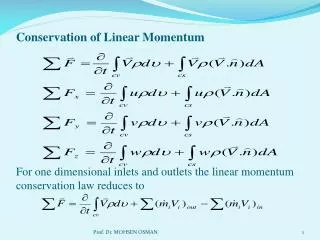
Review: Warm Air Advection • WAA means upward motion (overrunning) • Start with First Law of Thermo:
Euler’s Equation Generic lapse rates are positive
Temperature Tendency • Set the two equations equal to each other and solve for the local rate of change in temperature
Temperature Tendency Continued . Frozen Wave Approximation: P
Almost there… zero for adiabatic flow 30 35 40
Shortcomings… Only applies to one level (except for , of course) Indeed, overrunning air stream goes quickly to a new p or z level It would be really convenient to have only one surface to deal with…
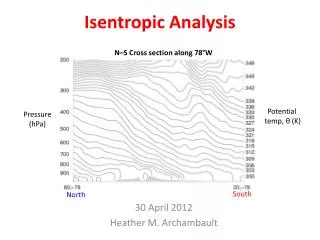
Isentropic Analysis Constant theta surface