High-Resolution Mass Spectrometry for D2 and 4He+ Ion Analysis in Electrolytic Experiments
This document discusses the challenges and solutions in analyzing D2 and 4He+ ions, whose mass ratios are closely matched (mD2 = 4.0282 amu, mHe = 4.0026 amu). A high-resolution mass spectrometer is required to distinguish between their peaks. Conventional dynamic and static analysis techniques have significant limitations, but innovative solutions using Non-Evaporable Getter (NEG) pumps offer high pumping speeds and minimal composition alteration, enabling effective on-line analysis. The system utilizes sophisticated automation for periodic sampling without disrupting the electrolytic process.

High-Resolution Mass Spectrometry for D2 and 4He+ Ion Analysis in Electrolytic Experiments
E N D
Presentation Transcript
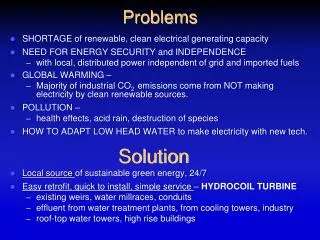
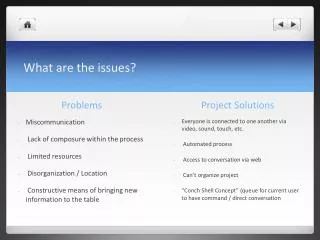
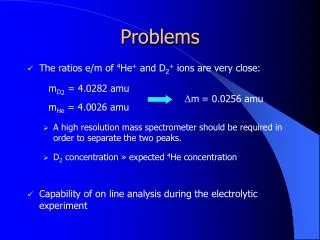
Dm= 0.0256 amu Problems • The ratios e/m of 4He+ and D2+ ions are very close: mD2 = 4.0282 amu mHe = 4.0026 amu • A high resolution mass spectrometer should be required in order to separate the two peaks. • D2 concentration » expected 4He concentration • Capability of on line analysis during the electrolytic experiment
Conventional techniques • Dynamic analysis technique (differential pumping or diffusion through large impedance circuits): • alter the original composition of the gas mixture; • exhibit low sensitivity; • do not allow for on line analysis. • Static analysis technique (Cryosorption pumps): • may erratically trap helium in the condensates; • require a long cycle time and are not suitable for on line analysis. • Unable to pump hydrogen isotopes to high degree
Innovative solutions • Non evaporable getter (NEG) pumps: • remove to a high degree all non inert components of the gas mixture (especially hydrogen isotopes); all inert gases are obviously preserved; • exhibit very high pumping speeds (especially for hydrogen); • the pumping speed for other active gases depends on the operating temperature of the getter alloy; • do not require frequent regeneration, allowing periodic analysis of gas samples during the experiment (roughly every 40 minutes). • A storage circuit has been purposely designed, which: • allows to periodically sample the gas mixture without influence on the electrolytic process; • eliminates any alteration of the gas mixture composition; • allows to easily compare the results of the analysis of each sample.
High resolution Mass Spectrometer (Balzers QMA 410). Two NEG pumps are used: SAES Capacitorr B 1300 (600 g of ST185 TiV alloy) operating at high temperature (300 - 400°C) SAES GP200 MK4 W (170 g of ST707 alloy) operating at RT. Dynamic pumping: Main pump: Pfeiffer TMU 261 turbo molecular drag pump Backing pump: Pfeiffer TMU 071 + MD4 No cryosorption pumps are used. Automatic operation (Field-Point + LabView). Pressure stabilized storage circuit. Main features
Gas mixture inert gases Thermostatic Box GV5 GV3 QMA UHV chamber n.o. n.c. HT NEG pump RT NEG pump Sample volume n.o. GV1 Storage circuit Cell UHV containment vessel n.o. = normally open valve n.c. = normally closed valve Schematic layout of the gas analysis system
High resolution spectra of a 4He-D2 mixture. dwell time 1 s, scan width 10 amu, scan time for each cycle 10s.
6 40Ar+ 5 Ion current (x10-8 A) 4 3 2 40Ar++ 1 0 0 5 10 15 20 25 30 35 40 45 50 Mass (amu) Analog spectrum of an air sample