Download
1 / 16
160 likes | 299 Vues
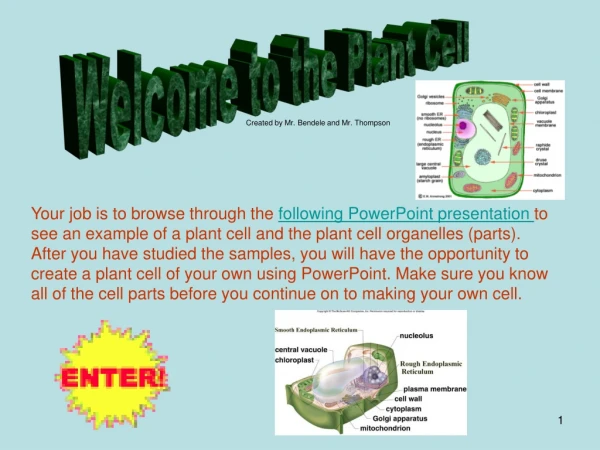
Dive into the fascinating world of plant cells with this interactive guide. Discover key organelles such as the cell wall, cell membrane, chloroplasts, vacuoles, and mitochondria. Learn how each structure contributes to the overall function of the cell. The guide covers essential processes like photosynthesis, metabolism, and protein synthesis. Ideal for students and anyone curious about cell biology, this resource will enhance your understanding of the plant cell’s anatomy and physiology. Join us in exploring the amazing functionalities of plant cells!

E N D
Plant Cell Science 2nd Period By: Alexis Harkrider, Avery Morey, Mackinzi Sterrett, and Nicole Deel
Click any button to explore the plant cell! CellMembrane Cytoplasm Mitochondrion Chloroplast Vacuole Lysosome Ribosome Golgi Bodies Organelle Nucleolus Nucleus END! Cell Wall Endoplasmic Reticulum
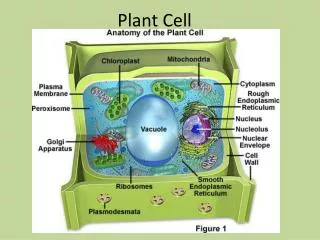
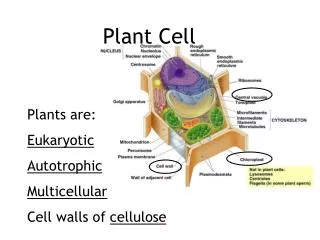
Cell wall • The cell wall provides and maintains the shape of these cells and serves as a protective barrier. Back
Cell Membrane • Every cell is enclosed in a membrane, a double layer of phospholipids (lipid bilayer). The exposed heads of the bilayer are ‘’hydrophilic’’ water loving, meaning that they are compatible with water within the cytoplasm. Back
Cytoplasm • The cytoplasm is mostly water. The cytoplasm is full of proteins, that control metabolism including signal transdactation pathways. Back
Nucleus • The nucleus is the most obvious organelle in any eukaryotic cell. It is enclosed in a double membrane and communicates with the surrounding cytoplasm and numerous nuclear pores. Back
Vacuole • A vacuole is a membrane bound sac that plays roles in intracellular digestion and the release of cellular waste products. Back
Endoplasmic Reticulum • The endoplasmic reticulum appears ‘’pebbled ‘’ by electron microscopy due to the numerous ribosomes on its surface. Back
Ribosome • Ribosomes are little packets of protein that play a sad part in both prokaryotic and eukaryotic cells. Back
Nucleolus • The nucleolus produces ribosomes which move out of the nucleus and take their positions around the endoplasmic reticulum where they are made into protein. Back
Lysosome • Lysosomes are very common in animal cells but very rare in plant cells. Back
Chloroplast • Chloroplasts are organelles found in all plant cells. They are also found in photosynthesis. Back
Mitochondrion • (Cell respiration) large organelle where energy is created and released. Provides the energy a cell needs to move around. back
Golgi Bodies • The golgi body is a membrane- bound structure with a single membrane. It is actually a stack of membranes!! Back
Organelle • The organelle is every part of the cell. Each organelle has its own job and carries out activites. back
CREDITS!!! • http://www.cellsalive.com/cells/cell_model.htm • http://www.google.com/images?hl=en&source=imghp&q=yellow+backgrounds&gbv=2&aq=f&aqi=g10&aql=&oq=&safe=active Thank you Mr. McMahon for all that you taught us this year! We wont forget you! We love you!