Understanding the Sun's Energy: Heat, Light, and Life Cycles
This interactive guide explores the vital role of the sun in providing heat and light that sustain life on Earth. It illustrates how sunlight affects various environments, such as terrariums and aquariums, showing how these systems mimic Earth's ecological cycles. You'll learn about shade, temperature measurement with thermometers, and the nutritious relationships between plants and animals. Through engaging questions, readers can actively think about the sun's energy and its fundamental importance in daily life.

Understanding the Sun's Energy: Heat, Light, and Life Cycles
E N D
Presentation Transcript
The Sun’s Energy Read each slide. Look closely at each picture. Answer each question.
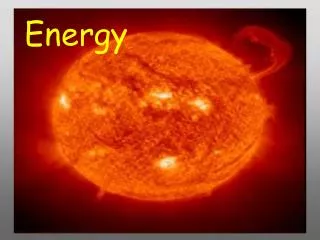
The sun gives us both heat and light.
When the sun’s rays are blocked we call it shade. Shade is always cooler than sunlight.
This is a terrarium. The light bulb acts like the sun. It provides heat and energy.
This is a terrarium for lizards. A strong light acts like the sun.
This is an aquarium. The light acts like the sun. It provides heat and energy for the plants and animals.
Aquariums and terrariums are like small models of our Earth.
The sunlight for the aquarium warms the fish and makes the plants grow.
The plants are eaten by the tiny fish. The tiny fish will be eaten by bigger fish.
The big fish will one day die and its body will nourish the plants which will grow and feed the little fish which will feed the bigger fish and it goes round and round and round. The energy flows on and on.
The Sun’s Energy 1. What does the sun give us? _________ • What happens to things that the sun hits? ___________________________ • What do we call areas where the sun’s rays are blocked? _________________ • What tool measures the sun’s heat energy? _________________________ • What does the light bulb do in an aquarium or terrarium? _____________