### Exploring Key Quotes and Their Significance in Shakespearean Literature ###
120 likes | 246 Vues
This document delves into several poignant quotes from Shakespeare's works, analyzing their speakers, listeners, and the significance behind each statement. Phrases such as "The lady doth protest too much, methinks" and "Thus conscience does make cowards of us all" reveal deep insights into human nature, morality, and the complexity of relationships. From the introspective musings on memory and guilt to the themes of ambition and fate, each quote serves to illuminate the timeless issues that continue to resonate with audiences. This exploration invites readers to engage with Shakespeare’s enduring legacy. ###


### Exploring Key Quotes and Their Significance in Shakespearean Literature ###
E N D
Presentation Transcript
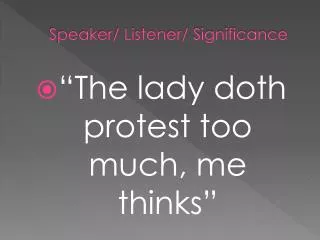
Speaker/ Listener/ Significance • “The lady doth protest too much, me thinks”
Speaker/ Listener/ Significance • “Thus conscience does make cowards of us all…”
Speaker/ Listener/ Significance • “Then there’s hope a great man’s memory may outlive his life half a year.”
Speaker/ Listener/ Significance • “Is there not rain enough in the sweet heavens To wash it white as snow?”
Speaker/ Listener/ Significance • “What, frighted with false fire?”
Speaker/ Listener/ Significance • “I do believe you think what now you speak…So think thou wilt no second husband wed, But die thy thoughts when thy first lord is dead.”
Speaker/ Listener/ Significance • “O good XXXXX, I’ll take the ghost’s word for a thousand pound. Didst perceive?” • Who is the XXX
Speaker/ Listener/ Significance • “Bow, stubborn knees, , and with strings of steel Be soft as sinews of the newborn babe.”
Speaker/ Listener/ Significance • “Then trip him, that his heels may kick at heaven, And that his soul may be as damned and black As hell, whereto it goes.”
Speaker/ Listener/ Significance • “Thou wretched, rash, intruding fool, farewell. I took thee for thy better. Take thy fortune.”
Speaker/ Listener/ Significance • “O XXX, speak no more! Thou turn’st my eyes into my very soul, And there I see such black and grained spots As will not leave their tinct.” • Who is the XXX?
Speaker/ Listener/ Significance • “Do not forget. This visitation Is but to whet thy almost blunted purpose.”