Cyberbullying
Cyberbullying is a form of online aggression that can harass, threaten, or embarrass individuals through various digital platforms. This guide offers clear signs to recognize if a child is experiencing cyberbullying and provides actionable guidelines for parents, educators, and students. Parents are encouraged to maintain open communication, set rules for online behavior, and collaborate with schools. Educators should support both parents and students in developing safe online habits and addressing cyberbullying within school policies. Students are urged to avoid engaging with bullies and to seek help.

Cyberbullying
E N D
Presentation Transcript
Cyberbullying Simple Guidelines for Parents, Teachers, and Students January 17, 2007
Cyber bullying is… …online social aggression which may harass, threaten, intimidate or embarrass someone through emails, IM, chat rooms, or any other online environment.
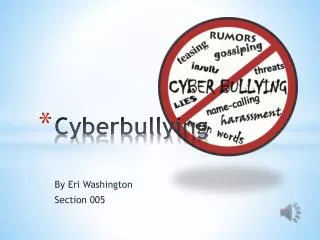
Flaming: Using angry language to provoke an online fight Outing: Sharing secrets Denigration: Online gossip that may damage a person’s reputation Impersonation: Pretending to be someone else Harassment: Repeatedly sending unwanted emails or messages Trickery: Obtain a secret by tricking someone and then sharing it online Exclusion: Leaving someone out of a group Cyberstalking: Repeated online harassment Forms of Cyber bullying SOURCE: Willard, Nancy. “An Educator’s Guide to Cyber bullying and Cyberthreats: Responding to the Challenge of Online Social Aggression, Threats, and Distress.” Accessed 16 January2007. http://www.cyberbully.org/
Signs to recognize…If a child is the victim of cyber bullying, you may notice: • S/he closes windows on the computer when people enter the room • Changes in behavior • S/he has trouble sleeping or has nightmares • S/he avoids school • S/he suddenly uses the computer less frequently • S/he is performing less well in school Source: Community Alliance for York Region Education. “Put the Breaks on Bullying.” Accessed 16 January 2007 http://www.yrdsb.edu.on.ca/page.cfm?id=IIC000023
Guidelines for Parents • Talk with your children and make sure they feel comfortable coming to you with their problems. • Define acceptable online behavior and set consequences for misusing the Internet • Find out and use safety controls offered through your internet service provider • Ask your child to show you how to do a task online. You will learn how cyber savvy s/he is while boosting their self esteem. • Work with your child’s school. Source: www.connectforkids.org Accessed 16 January 2007.
Guidelines for Educators • Work with Parents • Provide tips to your students about ‘How to be a good cybercitizen’ • Establish a relationship with your school and the local police department • Encourage your school district to address cyber bullying issues in their Acceptable Use Plans (AUP) • Assign educational and safe tasks to your students using the Internet. Source: www.connectforkids.org Accessed 16 January 2007.
Guidelines for Students • DON’T respond, interact, or engage in communication with someone who is harassing you online. • SAVE abusive emails • ASK for help from your parents or a teacher to handle a bully • RECOGNIZE when you hear a provoking comment • DECIDE if action is necessary and remember not to deal with an abuser yourself. Source: “Cyber bullying on the Internet, Cyber bullies, cyber bullying, flame mail, hate mail.” Accessed 16 January2007. http://www.bullyonline.org/related/cyber.htm