Exploring Texture in Art: Techniques and Applications
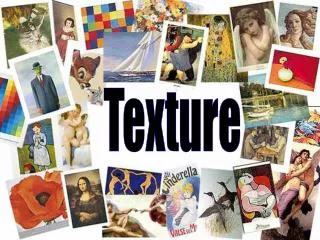
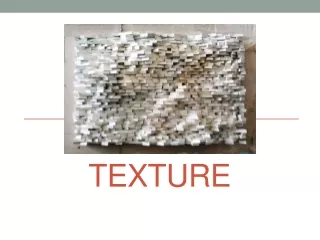
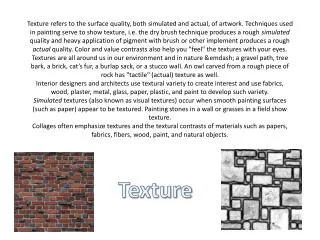
Texture is a fundamental aspect of artwork, defining both actual and simulated surface qualities. Techniques like dry brush create rough simulated textures, while heavy pigment application yields actual texture. Color and value contrasts amplify the perception of texture in art. Texture is ubiquitous in nature and design—think tree bark, burlap sacks, or stucco walls. Interior designers use diverse materials to create visual interest, while simulated textures transform smooth surfaces into textured illusions. Collages highlight textural contrasts in various materials, enhancing the overall artistic experience.

Exploring Texture in Art: Techniques and Applications
E N D
Presentation Transcript
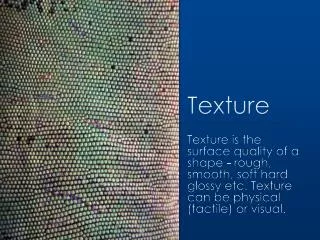
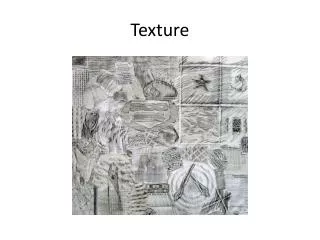
Texture refers to the surface quality, both simulated and actual, of artwork. Techniques used in painting serve to show texture, i.e. the dry brush technique produces a rough simulated quality and heavy application of pigment with brush or other implement produces a rough actual quality. Color and value contrasts also help you "feel" the textures with your eyes.Textures are all around us in our environment and in nature &emdash; a gravel path, tree bark, a brick, cat’s fur, a burlap sack, or a stucco wall. An owl carved from a rough piece of rock has "tactile" (actual) texture as well.Interior designers and architects use textural variety to create interest and use fabrics, wood, plaster, metal, glass, paper, plastic, and paint to develop such variety.Simulated textures (also known as visual textures) occur when smooth painting surfaces (such as paper) appear to be textured. Painting stones in a wall or grasses in a field show texture.Collages often emphasize textures and the textural contrasts of materials such as papers, fabrics, fibers, wood, paint, and natural objects. Texture