Acids/Bases/ & Acid Rain
100 likes | 216 Vues
This guide explains the fundamental concepts of acids and bases, including their definitions, common examples, and how to recognize them through taste and color changes in litmus tests. It delves into the pH scale, illustrating the strength of acids and bases, and describes neutralization reactions, showcasing practical examples. Additionally, it explores the phenomenon of acid rain, its formation through industrial emissions, and its effects on the environment, particularly on natural resources like lakes and forests, as well as its impact on limestone and marble structures.


Acids/Bases/ & Acid Rain
E N D
Presentation Transcript
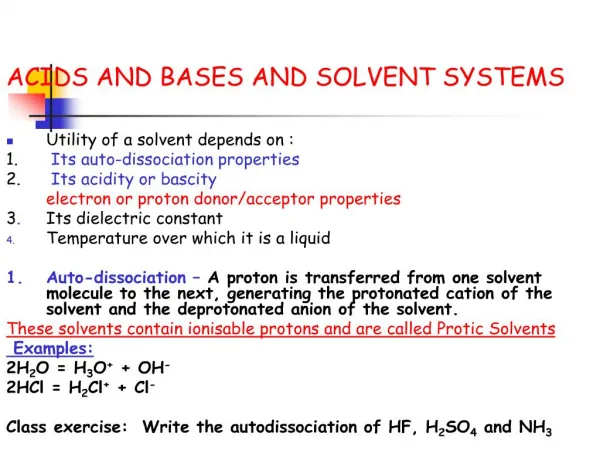
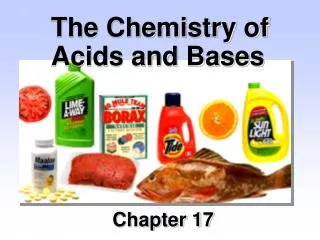
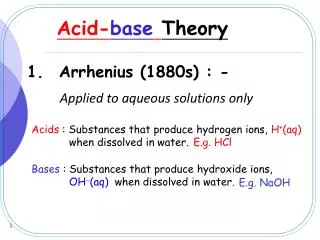
How to Recognize Acids & Bases • ACIDSBASES • H+hydrogen ions OH- hydroxide ions w/ a metal* • Ex. HCl, H2SO4, HNO3 Ex. NaOH, LiOH, Ca(OH)2, • other ex.’s= citrus fruits *visual exception NH3(aq) other ex= household cleaners • Acids taste sour Bases taste bitter • Litmus test ends REDLitmus test ends Blue
How to measure STRENGTH of Acids and Bases • pH scale: power of H+ ions 0 up to 7=Acidic 7= Neutral >7 to 14= Basic Strong Acids are near 0, Strong Bases near 14
Neutralization • Acids react with Bases in a neutralization reaction to form water HOH (and a salt) • Ex. HCl + NaOH HOH + NaCl • Pure water is neutral; equal concentrations of the H+ and OH- ions • As OH- are added to H’s, HOH or water forms and the pH of the solution “heads UP towards 7” • Ex. Start at pH=4 (acidic; more H’s than OH’s). Add OH-, water forms and final pH can be 6 • As H’s are added to OH’s, HOH or water forms and the pH “heads towards DOWN towards 7”
Acid Rain Background • CO2 + H2O H2CO3 carbon dioxide gas reacts with water to form WEAK carbonic acid. Although slightly acidic, this is considered NORMAL rainwater • SO2 + H20 H2SO4 sulfur dioxide gas reacts with water to form sulfuric acid. This is highly acidic and = ACID rain. Rainwater with a pH less than 5.5 is considered Acid Rain. This gas enters the atmosphere mainly from coal power plants and industrial smokestacks • NOx + H2O HNO3 nitrous oxides react with water to form nitric acid. This is highly acidic and= ACID rain. These gases enter the atmosphere mainly from vehicle emissions
Acid Rain’s Effect on Stone • Limestone and Marble w/CaCO3 is very susceptible to acid rain • Sandstone, granite, and other materials without CaCO3 is Not affected by acid rain • The lettering on this marble Stone has been weathered by acid rain