Download
1 / 43
430 likes | 532 Vues
This comprehensive guide covers the anatomy and physiology of the male and female reproductive systems. It details key structures such as the testes, epididymis, ovaries, and uterine tubes, along with their roles in sperm and egg formation. The physiological processes of erection, ejaculation, gametogenesis, and hormonal cycles, including the menstrual cycle, are explained. Additionally, common disorders such as testicular cancer, prostate issues, and sexually transmitted diseases are addressed, highlighting their impact on reproductive health and homeostasis.

E N D
The Reproductive System Chapter 27
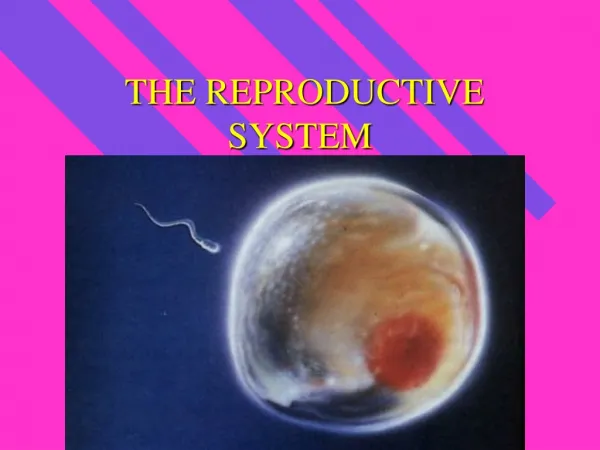
Sperm • Three regions • Head with acrosome • Mid-piece or body • Tail • Enzyme Hyaluronidase
Physiology of Male System • Sperm Analysis • One of the first tests done to determine male infertility • Sterile if less than 20 million sperm per ml • Erection • Controlled by the parasympathetic nervous system • Nitric oxide causes the smooth muscles to relax and the blood vessels to dilate • Ejaculation • Controlled by the sympathetic nervous system • Also called climax or orgasm
Gametogenesis • Occurs by Meiosis rather than mitosis • Results in four daughter cells rather than two • Reduces chromosome number by one-half
Ovarian Cycle • Follicular phase • Ovulation • Luteal phase
Uterine Cycle • Menstrual stage (menses) • Pre-ovulatory stage (proliferative) • Post-ovulatory stage (secretory)
Testicular cancer Prostate cancer Prostatitis Cryptochidism Impotence Pelvic inflammatory disease Cervical cancer Uterine prolapse Nondisjunction Sexually transmitted diseases Gonorrhea Syphilis Chlamydia Genital warts Genital herpes Amenorrhea and menopause Dysmenorrhea Endometriosis Homeostatic Imbalances