Exploring Outer Planets: Storm Dynamics, Atmospheric Composition, and Innovative Balloons
This document explores the complexities of storm evolution on Jupiter, including the meteorological aspects surrounding its iconic red spot and the potential for identifying distinct storm clouds. It also addresses long-term monitoring of Uranus and Neptune, focusing on cloud dynamics and spectroscopic identification of various components. Additionally, the preliminary investigations of Mars's climate and water distribution, as well as Venusian trace gas studies, highlight the capabilities of balloon platforms for conducting impactful science. The importance of continued climatology and innovative approaches for future decadal missions is emphasized.

Exploring Outer Planets: Storm Dynamics, Atmospheric Composition, and Innovative Balloons
E N D
Presentation Transcript
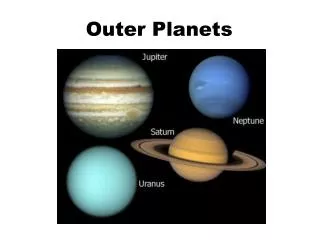
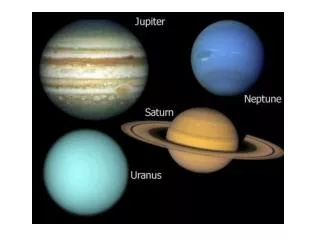
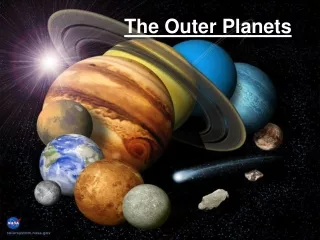
Outer Planets • Jupiter, clouds around red spot, storm evolution, temporal coverage. Decadal also mentioned redesign of JEO. Spectro-identifiable storm clouds and evolution, meteorology, water clouds too? Ammonia Hydrosulfide? • Uranus/Neptune (clouds, long-term monitoring, .01” needed, can do in visible to near IR, AOTF inst, time base is the big driver here, full rotation, dynamics-composition-time, spectroscopic identification of clouds, methane, acetylene, aerosol identification, FabryPerot+AOTF) • Europa • Mars • characterize distribution of water, dust, the cycles. Done from orbiters but lacking some diurnal coverage. Composition (methane). Need to continue the climatology between missions (long wavelength CO2, temperature, dust opacity, water) • Venus • Sun-Venus connection • Climate
Can do Mars trace gas science from a balloon, minimizing telluric interference but on a cheaper and quicker timescale. What Decadal mission science can be done from a balloon platform? New Frontier science? Much of it is sample return, but Venus science could be done. Also Uranus science (atmos, magneto). Non-decadal science that strongly complements decadal mission science. Will make for a most robust R&A program across many disciplines. Decadal missions that can be addressed by balloons: