Download
1 / 6
60 likes | 181 Vues
The Cold War marked a period of intense rivalry between the Soviet Union and the USA following WWII. Initially allies against Nazi Germany, tensions escalated as both nations pursued opposing ideologies—capitalism versus communism. Key events such as the Yalta Conference in February 1945 set the stage for a divided Germany and contrasting post-war goals. The establishment of the Iron Curtain exemplified the division of Eastern and Western Europe, significantly shaping political landscapes, human rights, and societal norms across the continent.

E N D
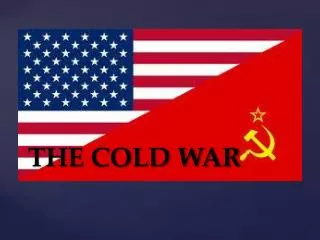
THE COLD WAR AKA: The diplomatic war between the Soviet Union and the U.S.A. from 1945-1991
Post WWII • WWII- The U.S. and Soviet Union fought together against the Nazi’s. • U.S.A. was upset about Stalin signing the non-aggression pact with Germany • Stalin upset the U.S. didn’t invade Germany earlier than 1944. • Soviet Union and U.S.A. began pursuing opposing goals.
Yalta Conference • Feb. 1945- U.S., Britain and S.U. agree to divide Germany. • Germany to compensate S.U. for life and loss. • Soviet Union would join war against Japan. • Stalin agrees to free elections in Eastern Europe. • U.S. and S.U. were affected very differently from the war.
Post War Goals U.S.A. • Encourage democracy • Gain access to raw materials to boost industry • Rebuild European Governments – promote stability. • Reunite Germany Soviet Union • Encourage Communism • Rebuild its war ravaged economy using materials from E. Europe. • Control E. Europe to maintain balance of power with U.S. • Keep Germany divided.
The Iron Curtain divided East & West • Soviet wanted a buffer to prevent another invasion from the West. • He ignored the Yalta conference and set up Communist governments in countries along the W. border • Stalin said: “Capitalism & Communism can’t exist in the same world.”
Eastern Europe Questions* Use the reading to answer the following questions in complete sentences. • How were Eastern European countries influenced by the war? • What countries fell to Communist rule? Why did Stalin choose these countries? • Compare the rights people had under Communism in Eastern Europe with the rights people have in Western democracies. • What were the best and worst aspects of life under Communism? • What were Human Rights like in Eastern Europe under a communist regime?