Understanding Character Types: Round, Flat, Dynamic, and Static
This guide explores different types of characters in literature, focusing on round and flat characters, as well as dynamic and static ones. Round characters possess complex, often contradictory personality traits that make them relatable and engaging. In contrast, flat characters are typically one-dimensional and stereotypical. The methods of character development are examined, including direct and indirect characterization, physical descriptions, attitude, dialogue, and the reactions of others. Understanding these concepts will help writers create memorable characters that resonate with readers.

Understanding Character Types: Round, Flat, Dynamic, and Static
E N D
Presentation Transcript
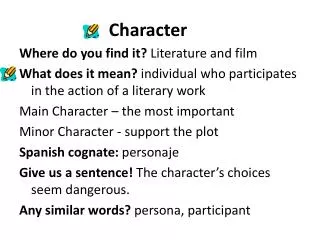
Types of Characters • Round • Many different personality traits-often contradictory; draws the reader in as a real individual Flat Few personality traits, often stereotyped Dynamic Experiences Change Static Remains unchanged
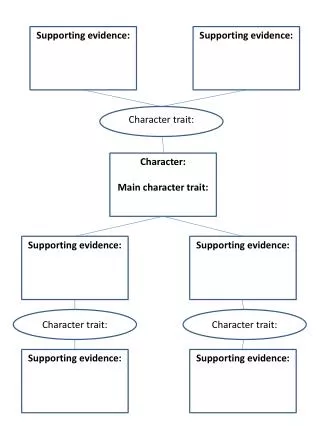
Methods of Character Development Direct characterization: the narrator or a character in the story tells us what we need to know about a character Indirect characterization: we find out about characters indirectly through thoughts, comments, or actions of the characters
1. • Physical Description • Most common method • Identifies anything physical about the character • Height • Skin • Hair and eyes • Body type • Posture • Clothing • Personal possessions
2 • Name • Sometimes the name is chosen carefully and represents something in the story. Sometimes not
3 • Attitude • How the character reacts to the events of the story • Thought and Feelings • Dialogue • Actions – Body Language (Things I’ll never say) AvrilLaVigne TED • Narration
4 • Dialogue • The way the character speaks • Choice of words • Syntax • Tone Can convey attitudes and relationships
5 • Thoughts • Can only analyze the thoughts of the character whose point of view we are following • Omnicient POV– everyone’s thoughts • Limited POV – only the character through whom we are see the story
6 • Reactions of Others to the Character • How do other characters treat this character? • Verbal responses • Physical responses • Emotional responses
7 • Actions – Linked to the progress of the Plot • How the character reacts physically to the events of the story • Incidents of the past that have shaped the characters motives and actions in the present • Amy Cuddy(show me)
8 • Physical or Emotional Setting • The character’s reactions to the physical and emotional environments in the story.