Discovering the Microscopic World: The Impact of Microscopes on Science
For centuries, the circulatory system puzzled scientists until the advent of the microscope. Pioneered by Marcello Malpighi in the 17th century, microscopy revealed the intricate network of capillaries, shedding light on how blood circulates within the body. With the use of compound light microscopes, equipped with multiple lenses that magnify tiny specimens, we can uncover a world that our naked eyes cannot see. This innovation not only revolutionized our understanding of biology but also opened new avenues for exploration in science, revealing the complexity of life down to the cellular level.

Discovering the Microscopic World: The Impact of Microscopes on Science
E N D
Presentation Transcript
Microscopes! Time to be real scientists!
How They Are Useful! • For years we could not figure out the circulator system! • Could see veins, arteries, heart, etc … • They knew the blood got back to the heart but at a certain point … nothing could be seen connecting them! • Enter … Marcello Malpighi
How They Are Useful Cont … • Was examining frog tissues when he discovered a network of tiny veins and arteries! • Capillaries Latin for “hair”
Human Sight = Limited! • Humans eyes can only see clear, defined images that are 0.1mm or larger. • Whole world we cannot see • Enter 1600 century and BAM …!
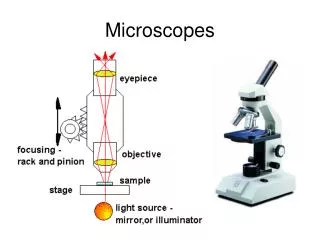
What are we using? • Compound Light Microscopes! • Two or more lenses = compound microscope! • Why compound LIGHT microscope? • Light/lamp located at base • Microscopes magnify tiny items