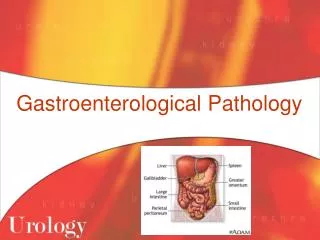
Gastroenterological Pathology
This guide provides an in-depth overview of various gastroenterological pathologies, including appendicitis, irritable bowel syndrome, inguinal hernia, and more. It covers the nature and course of abdominal symptoms, associated signs and symptoms, and relevant medical history considerations. Detailed physical assessment techniques, special tests, and management strategies for common conditions like ulcers, gastroenteritis, and abdominal trauma are discussed. Key points such as symptom onset, location of pain, and treatment options provide healthcare professionals with crucial insights for diagnosis and care.

Gastroenterological Pathology
E N D
Presentation Transcript
History • Nature & course of abdominal symptoms • Associated s/s • Past medical, family & surgical Hx • Medications • Could you be pregnant?
Pain • Onset & Duration • Location & Movement
Physical Assessment • See Evaluation Form • Inspection • Auscultations • Percussion
Physical Examination • Palpations • Abdominal Quadrants • Referred Pain • Special Tests
Abdominal Pain Options • Appendicitis • Irritable Bowel Syndrome • Inguinal Hernia • Esophageal Reflux/Indigestion • Colitis • Ulcer • Diarrhea/constipation • Gastroenteritis • Gastritis • Crohn’s Disease • Trauma – spleen, liver, hollow viscous
Appendicitis • Pain usually (70%) starts centrally (umbilical region) and moves to Mcburney’s Point • The RLQ becomes tender in 65%-95% of cases • Most common acute surgical condition of the abdomen • Occurs in about 7% of population, between age 10-30 yrs old
Appendicitis: Pathogenesis • Long finger-like process that extends from the inferior tip of the cecum • Obstruction of the narrow lumen initiates the clinical illness • D/T viral illness or fecal obstruction (fecaliths)
Appendicitis • S/S: • Tests: • Tx/Complications:
Appendicitis-Tests • Psoas Sign
Appendicitis - Tests • Obturator Sign
Irritable Bowel Syndrome • Common disorder, cause unknown • S/S: • Bleeding, fever, weight loss, and persistent severe pain are NOT s/s of IBS
IBS – cont. • Diagnosis: • TX: • BRAT Diet:
Inguinal Hernia • Definition: • s/s: • Tx: referral to surgeon • Can be difficult to diagnose. Common when born
Ulcers • Excessive secretion of gastric acids, inadequate protection of mucus membrane, stress, heredity, medications • s/s: • Dx: • Tx:
Esophageal Reflux • Malfunction of lower esophageal sphincter, • Cause…intrinsic pressure, angle of cardioesphygeal junction, action of diaphragm, gravity • s/s: • Dx: • Tx:
Diarrhea • Causes: infection, drug-induced, food related, post-surgical, psychological, exercise (runner’s trot) • s/s: • Dx: • Tx: • BRAT diet:
Constipation • Definition: • S/S: • Dx: • Tx:
Gastroenteritis • Definition: • Cause: E. Coli infection, staphlococcal food poisoning, botulism, viral, chemical or drug related • S/S: • Dx: • Tx:
Colitis • Cause: Unknown • S/S: • Dx: • Tx:
Crohn’s Disease • Ulcerative colitis • S/S: Will present with a lot of blood in stool, pain • Dx: colonoscopy • Tx: surgical removal of ulcerated portion
Abdominal Trauma • Common sports • Key is immediate recognition, monitoring & management • Protocol when recognized
Abdominal Trauma • Screening tools: • Ultrasound: +/- • Diagnostic Peritoneal Lavage: +/- • Computed Tomography: +/-
Splenic Injuries • Most commonly injured organ in abdomen • Deceleration causes a shearing force on vessels and capsule • Blunt trauma to LUQ • Risk of Injury increases c:
Splenic Injuries • S/S: • Tx: avoid surgery if possible • Return to play:
Liver Injuries • 2nd most common injured • Blunt trauma to RUQ, lower chest from front or back • s/s: • Tx:
Hollow Viscous Injuries • Stomach, small intestine, pancreas,bladder • Cause: • s/s: • Tx: recognition and referral
Still more options • Are you pregnant?, reproductive diseases • Later chapter/discussion • UTI or bladder infection • Can be secondary to appendicitis
Summary • If fever, bloody stool/urine, pallor, distress, no body movement, unexplained weight loss or severe pain are present, something serious is wrong!!