Enhancements to PHENIX Drell-Yan Capabilities: A Forward-Looking Perspective
210 likes | 337 Vues
In a presentation by Oleg Eyser from UC Riverside at the Santa Fe Polarized Drell-Yan Workshop, key upgrades for the PHENIX experiment were discussed. The midterm enhancements target improved measurements of spin-dependent interactions using polarized He3, while long-term evolution focuses on advanced detector technologies and precision tracking for Drell-Yan studies. Emphasis is placed on increased collision energies and the fundamental tests of QCD, including new techniques for particle identification and significant reductions in QCD background, paving the way for groundbreaking contributions to spin physics.


Enhancements to PHENIX Drell-Yan Capabilities: A Forward-Looking Perspective
E N D
Presentation Transcript
PHENIX Upgradesand Drell Yan Capabilities K. Oleg Eyser UC Riverside for the PHENIX collaboration Santa Fe Polarized Drell Yan Workshop October 31, 2010
PHENIX Decadal Plan • Midterm upgrades until 2015 • Long term evolution after 2015 • Dynamical origins of spin-dependent interactions • New probes of longitudinal spin effects • Measurement with polarized He3 and increased energies www.phenix.bnl.gov/plans.html
sPHENIX detector acceptance • Data Acquisition System • Trigger capabilities
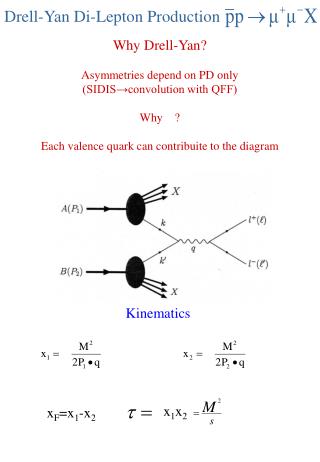
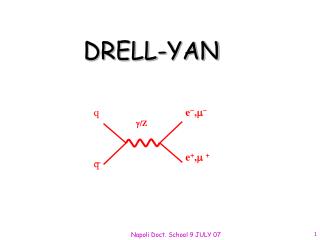
Polarized Drell Yan • Solid factorization • No fragmentation • Direct correlation of intrinsic transverse quark momentum to the proton spin • Fundamental QCD test • Sign of asymmetry compared to SIDIS current Muon arm acceptance Z. Kang and J. Qiu. Phys. Rev., D81:054020, (2010)
Kinematics DY: electron-positron pairs minv > 3 GeV/c2 • Leptons have large energies • Larger cross section with increased collision energy • Large AN for y > 2 • More forward favorable over PHENIX Muon arm detectors () s = 200 GeV s = 500 GeV muon arm acc.
Magnet • Solenoidsimilar to D0 • Magnetic field: B = 2 T • Magnet dimensions: d = 1 m, l = 2 m • Field return with small forward impact
Forward Detectors • Forward direction: 1.0 < || < 4.0 • Momentum / charge identification • Optimized for electron / photon identification • Hadron rejection (identification) • Tracking • Good resolution with small radiation length • Displaced vertex from heavy flavor <100 µm • VTX & FTVX in use before 2013 • R&D for CMOS MAPS • Severe material constraints fore+p / e+A
Calorimetry & Particle ID • Combine electro-magnetic and hadroniccalorimetry with a preshower detector • EMCal: PbGl/ PbSc / PbWO4 • Large longitudinal momenta require small Moliere radius • π0 reconstruction up to 80 GeV desirable for AN at high xF • Radiation hardness at large pseudo-rapidities • HaCal: FeSc (same as central HaCal) • Typical energy resolution needed • If muon ID is beneficial: CALICE concept • PreShower • Based on FOCAL proposal • 2∙X0 with two layers of Si strips (500 µm pitch) • Full GEANT4 modeling not done yet
Ring Imaging Cerenkov Detector • Dual-radiator RICH • Combine aerogel and gas radiator • naerogel > 1.03 • nC4F10 = 1.00137 • Particle ID up to p = 60 GeV/c • Light-weight mirrors • Glass coated beryllium or carbon fiber • Photon detectors: • PMT, APD, HPD, GEM… • R&D needed to determinethe best solution for therequirements LHCb multi-radiator RICH
Simulation settings 10M events for Drell Yan 100M+ event for QCD background • PYTHIA 6.4 • Tune A • Drell Yan: ISUB 1 • QCD jets: ISUBs 11, 12, 13, 28, 53, 68 • Elastic, diffraction, and low-pT: ISUBs 91, 92, 93, 94, 95 • ISUB 1: decay modes minv> 3 GeV/c2 electrons muons electron pairs from Drell Yan electron pairs in ISUB 1 minv < 3.0 GeV/c2 is not physical Virtual photon decay minv (GeV/c2)
Electron pair kinematics • Drell Yan leptons have large energies • Forward direction has desired asymmetry • Background from QCD • Decreases with lepton energy • Decreases with lepton rapidity Opening angle of electron-positron pairs lepton energy cut E > 1.0 GeV E > 2.0 GeV E > 3.0 GeV lepton pseudo-rapidity cut Drell Yan QCD bg
Hadron rejection • All charged particle pairs between J/ and • Hadron suppression 103-104 needed at 500 GeV • Drell Yan signal reduced in 200 GeV forward s = 200 GeV s = 500 GeV
Fast detector modeling: RICH Lose electrons due to detector efficiency Mis-identify mesons as electrons Ring Recognition and Electron Identification in the RICH detector of the CBM experiment at FAIRJournal of Physics: Conference Series 219 (2010) 032015 http://iopscience.iop.org/1742-6596/219/3/032015/pdf/1742-6596_219_3_032015.pdf
Detector smearing • Track resolution • Momentum smearing • Energy resolution • Electromagnetic shower • Hadronic interaction in the EMCal • Hadronic interaction in the HaCal • Electron efficiency 94% (p>10 GeV/c) • preShower is not included yet • additional hadron rejection ≈10 • All rapidity cuts are on the leptons’ pseudo-rapidity (detector acceptance)
Charge identification • Lepton multiplicities are small in the detector acceptance • ≈50% increase at small minv • Negligible effect for minv> 2 GeV/c2 w/ charm electron multiplicity w/ bottom positron multiplicity
Background kinematics • Electrons and positrons from hard QCD processes are uncorrelated • Opening angles are comparable to Drell Yan: detector acceptance • Lepton energies of Drell Yan decays are large • Energy cut removes QCD background at small minv • Large energies in QCDbackground favor mid-rapidity • Energy asymmetry hasnot been instrumented yet
QCD jet background • Drell Yan signal • 3 – 10 GeV/c2 • Energy cut • E1,2> 2 GeV • Forward rapidities • Effectively no background left • Statistically limited • Drell Yanfor minv < 3 GeV/c2 not physical (PYTHIA settings) 2G PYTHIA events for hard QCD and diffractive processes
Heavy flavor contributions • More low mass heavy flavor in central directions • Charm & bottom contributions increase with minv • Need designated heavy flavor simulation • Comparison at minv < 3 GeV/c2 needs more studies • See previous slide • Smaller energy cut
Summary • PHENIX has prepared a new decadal plan for 2011-2020 • New detectors have been proposed to replace the central and parts of the forward detectors • Drell Yan transverse single spin asymmetries are expected to be largest at 2 < y < 4 • A possible measurement is most promising at 3.0 GeV/c2 < minv < 10 GeV/c2 • Fast detector smearing has been included in PYTHIA stuides • Di-lepton background from hard QCD and diffractive processes is effectively removed in forward directions • Detailed detector simulations needed