Human Reflexes and Response Times
100 likes | 265 Vues
This study explores the nature of human reflexes, focusing on automatic responses to auditory and visual stimuli. Reflexes are categorized as simple (unlearned) or acquired (conditioned). The reflex arc, involving sensory neurons, CNS integration, and motor neurons, is key to these responses. Reaction times for college-aged men show 190 ms for auditory and 160 ms for visual stimuli. Various factors, including stimulus strength, age, and distractions, can influence these times. Participants will conduct individual experiments and report findings in their own words.


Human Reflexes and Response Times
E N D
Presentation Transcript
Human Reflexes and Response Times Auditory and Visual Cues
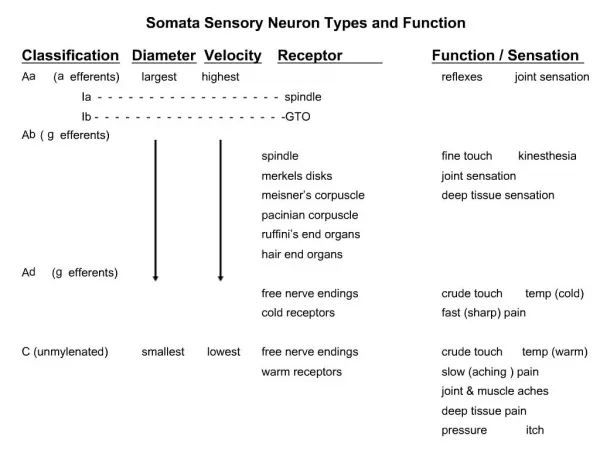
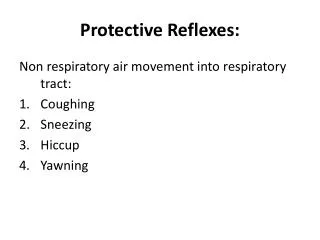
Reflex • Any response that occurs automatically without conscious effort. • Two Types: • Simple or basic: built –in, unlearned responses. • Acquired or conditioned: result of practice and learning.
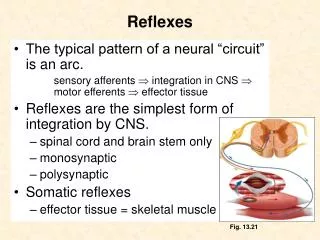
Reflex Arc: Afferent pathway CNS Stimulus Receptor Integration Center Sensory neurons Efferent pathway Response Effectors Motor neurons Muscle or gland Reflex is predictable because the pathway between the receptor and effector is always the same.
Receptor Afferent pathway
Reaction Times • College age men: • 190 ms auditory • 160 msvisual • Why ? • Auditory stimulus takes 8-10 ms to reach brain. Visual takes 20-40 msec.
Factors Influencing Reaction Time • Stimulus Strength • Arousal • Age • Gender • Direct vs. Peripheral Vision • Fatigue • Alcohol • Distractions • Breathing Cycle • Intelligence
Today’s lab • Lab should be done by EACH member of the group as a subject. • We will not compare class values, so ignore that part in labscribe questions. • Just compare within your own group.
Homework • Answer ALL questions from labscribe assignment. • Write a methods section for a scientific paper. Do NOT copy word for word from labscribe. Write them in your own words.
Methods • Should describe what was done so that someone who is not in this class could repeat the experiment. • Do not give grave detail regarding the operation of labscribe. • Include information regarding the way data were collected and what analyses of those data you did (mean, standard error of the mean, comparisons).