The Foundations of Early English Settlements: Jamestown and Plymouth (1607-1620)
Explore the trials and triumphs of early English settlements in America, focusing on Jamestown and Plymouth. Jamestown, founded by the Virginia Company of London in 1607, faced initial failures due to disease and conflicts with Native Americans. John Smith's leadership and the introduction of tobacco by John Rolfe heralded its success. In 1620, the Puritans established Plymouth seeking religious freedom, implementing self-governance through the Mayflower Compact. However, the Salem Witch Trials reveal the harsh realities of dissent in this society, leading to tragic consequences.


The Foundations of Early English Settlements: Jamestown and Plymouth (1607-1620)
E N D
Presentation Transcript
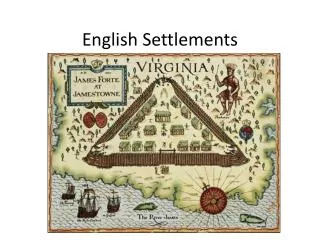
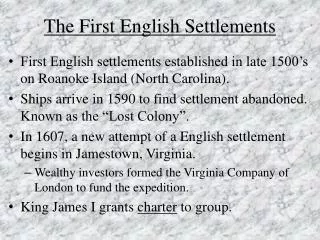
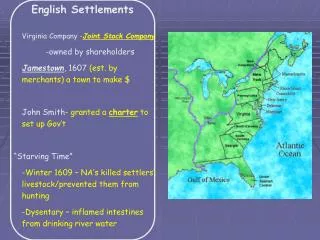
Jamestown (1607) • Founded by VA Company of London as a business venture • Complete Failure at First • Bad Sanitation (disease) • Native American Attacks • People refused to do work
John Smith • Leader who made changes in colony to ensure survival • “He that shall not work, shall not eat”
Jamestown • Saved by the introduction of tobacco by John Rolfe • Tobacco became the first profitable cash crop in America
Jamestown • 1619 signs of success at Jamestown • First women • First slaves • First elected legislature (VA House of Burgess)
Bacon’s Rebellion • Cavaliers in Western VA needed protection from Indians • VA Governor refused to protect them • Nathaniel Bacon put together an army to fight Indians
Bacon’s Rebellion • Embarrassed Gov gathered army to stop Bacon • Bacon attacked and burned Jamestown
Plymouth (1620) • Settled by the Puritans (pilgrims) from England • They were seeking religious freedom in America
Mayflower Compact • First document for government in New World • Established “covenant community” – governed by themselves • One man, one vote direct democracy • All issues debated and voted on at town hall meetings • NO RELIGIOUS FREEDOM IN PLYMOUTH
Salem Witch Trials • Puritans accused dissenters of being witches • Dissenters put on trial • Many were hung, drowned, and burned • Months later, Puritans realized that it all was a lie