SlideServe
Menu
Préférences
© SlideServe · v2026

Fine PM Source Test Method

Leo avatar
23 diapositives · 680 Views · Sep 14, 2011

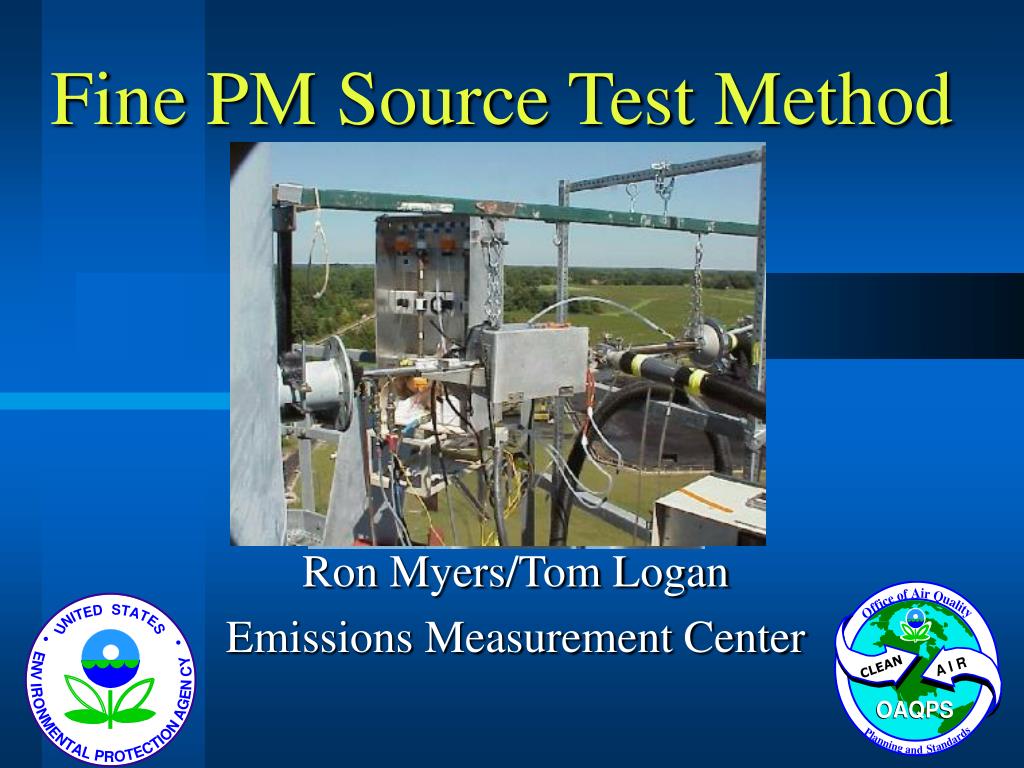
Fine PM Source Test Method. Ron Myers/Tom Logan Emissions Measurement Center. Project Goals. Quantify Course & Fine PM Use Dilution Sampling to Mimic Atmospheric Physics Operationally Simple Minimal Sample Location Limitations. Minimize Pseudo Particulate Formation.
Fine PM Source Test Method - slide 1
01 / 23Fine PM Source Test Method
1 / 17

Télécharger la présentation

Fine PM Source Test Method
Une image / un lien ci-dessous est fourni (tel quel) pour télécharger la présentation

Politique de téléchargement : le contenu du site vous est fourni TEL QUEL pour votre information et votre usage personnel ; il ne peut être vendu, concédé sous licence ni partagé sur d’autres sites sans l’accord de son auteur.Le contenu vous est fourni TEL QUEL, pour votre information et votre usage personnel uniquement. Téléchargez la présentation en cliquant sur ce lien. Lors du téléchargement, si vous ne parvenez pas à télécharger une présentation, l’éditeur a peut-être supprimé le fichier de son serveur.Pendant le téléchargement, si vous ne parvenez pas à obtenir une présentation, le fichier a peut-être été supprimé par l’éditeur.

F I N

Plus de contenu associé

Transcription de la présentation
  1. Fine PM Source Test Method Ron Myers/Tom Logan Emissions Measurement Center

  2. Project Goals • Quantify Course & Fine PM • Use Dilution Sampling to Mimic Atmospheric Physics • Operationally Simple • Minimal Sample Location Limitations • Minimize Pseudo Particulate Formation • Speciation of Particulate

  3. Description • In Stack Particle Sizing • Large Cyclone Separates PM >10mM • Smaller Cyclone Separates PM >2.5mM • Air Dilution Condenses Vaporous PM • Air is Filtered & Dehumidified • Sample is Diluted up to 40 to 1 • PM2.5 is collected on multiple filters

  4. Competing Methodologies • State Test Methods • More Than Four Variants • Similar to Method 202 • U.S. EPA Test Methods • Preliminary Method 004 (M201A +2.5) • Method 202 • Research Methods • More Than Six Variants • All Based on Dilution Sampling

  5. EPA Reference Methods • EPA Pre Method 4 & Method 202 • Strengths • Compact • Uses Existing Sampling Systems • Applicable to Almost All Sources • Weaknesses • Optional Procedures Allowed • Potential Biases

  6. Existing Dilution Methods • More than Six Variants • With/Without Stack Particle Sizing • Different Residence Times • Dilution Ratios • Strengths • Condense Particulate by Dilution • Weaknesses • Heavy, Bulky, Complex

  7. Typical Research Test Method

  8. Typical Research Test Method

  9. Existing Sampler

  10. In Stack Particle Sizers

  11. Heated Sample Venturi

  12. Dehumidifier / HEPA Filter

  13. Mixing Chamber

  14. Dilution Air Mixer

  15. Major Components

  16. SpeciationFilter Module • Aliquot of diluted sample extracted for speciation analysis • Denuders used to remove potentially reactive gases

  17. Development Phase Evaluation Phase Standardization 2001 2002 2003 2004 Dec Apr Aug Dec Apr Aug Dec Apr Aug Dec Apr Schedule • Expected Need in FY 2004

  18. Current Status • Completing Hardware Development • Hardware Operates as Expected • Sample Rate Maintained • Isokinetics Maintained • Dilution Ratios Maintained • Temperatures Maintained • Have Final Results from 2nd Hardware Shakedown Test • Completed Two Comparison Tests • Modified URG Dilution Sampler • Pre M4 & Method 202

  19. 0.05 DST 0.045 PM <2.5 0.04 PM >2.5 0.035 0.03 M17/202 Concentration(gr/dscf) 0.025 Ps PM 0.02 ICPM 0.015 OCPM FPM 0.01 0.005 0 Dilution Sampling System (7ppm SO3) Method 17/202 9ppm SO3 Sampling Method & Process Operation Method 17/202 15 – 18 ppm SO3 Preliminary Results of Second Test • Hardware Evaluation • Coal Fired Utility • M17/202 Performed Previous Year • ESP Rebuild Before EPA Test

  20. 40 35 30 25 Concentration (mg/dscm) 20 15 10 5 0 1 2 3 1 2 3 OAQPS DST ORD DST Test Method and Run number Preliminary Results of Third Test • Oil Fired Boiler • At <20% Load • Poor Test Location • Expanding Duct • In 90o Turn • Very Complex Speciation

  21. CPM (ACT) CPM (M202) CPM (EPA) FPM2.5 PM >2.5 125 105 85 PM (mg/dscm) 65 45 25 5 R 1 R 2 R 3 R 1 R 2 R 3 -15 Mill Off Mill On Preliminary Results of Fourth Test Portland Cement Plant 20 to 130 ppm NH3 500 ppm SO2 500 ppm NOx

  22. Operating OAQPS Sample Train

  23. QUESTIONS