

SlideServe
Menu
Préférences
© SlideServe · v2026

Group Communication

adina avatar
17 diapositives · 628 Views · Sep 09, 2014

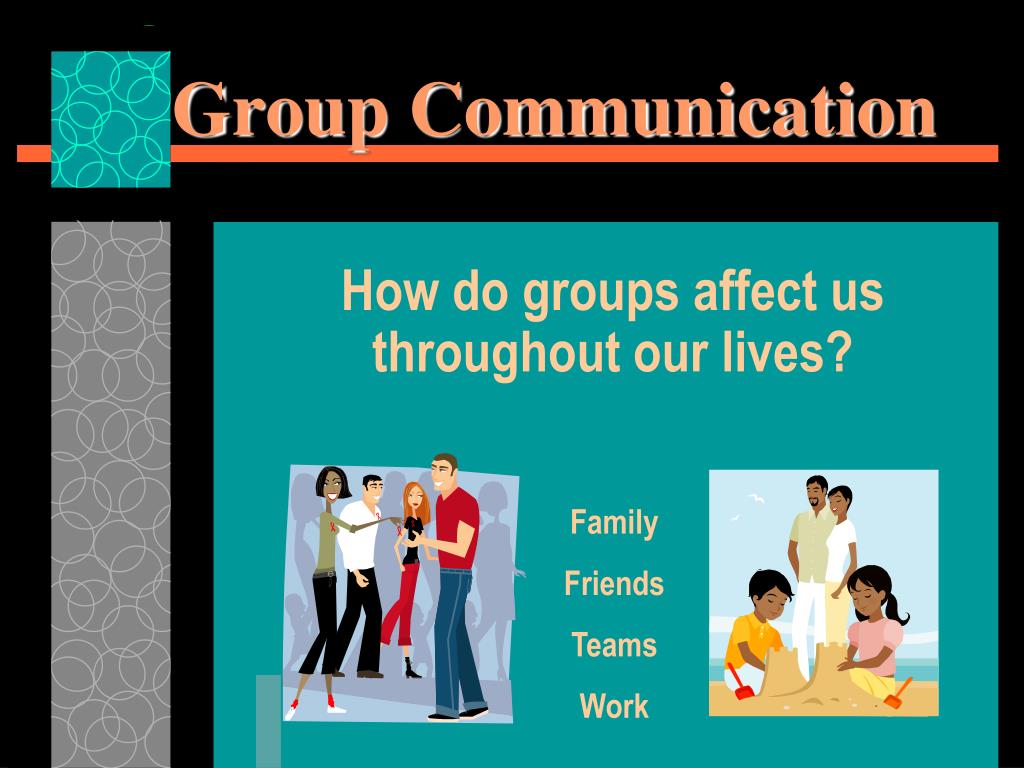
Group Communication. How do groups affect us throughout our lives?. Family Friends Teams Work. Group Communication.
Group Communication - slide 1
01 / 17Group Communication
1 / 17

Télécharger la présentation

Group Communication
Une image / un lien ci-dessous est fourni (tel quel) pour télécharger la présentation

Politique de téléchargement : le contenu du site vous est fourni TEL QUEL pour votre information et votre usage personnel ; il ne peut être vendu, concédé sous licence ni partagé sur d’autres sites sans l’accord de son auteur.Le contenu vous est fourni TEL QUEL, pour votre information et votre usage personnel uniquement. Téléchargez la présentation en cliquant sur ce lien. Lors du téléchargement, si vous ne parvenez pas à télécharger une présentation, l’éditeur a peut-être supprimé le fichier de son serveur.Pendant le téléchargement, si vous ne parvenez pas à obtenir une présentation, le fichier a peut-être été supprimé par l’éditeur.

F I N

Plus de contenu associé

Transcription de la présentation
  1. Group Communication How do groups affect us throughout our lives? Family Friends Teams Work

  2. Group Communication • As much as we may hate to admit it, groups tell us what to think and feel, how to act, and even how to dress. For good or bad, we are who we are because of the groups we have been a part of.

  3. Why Communicate in Groups? • Groups provide more input than individuals do • Studies show that groups are often more effective than the best individual within them.

  4. Why Communicate in Groups? • Groups provide support and commitment • Sometimes workloads are too much for one individual. • Groups provide a sharing of the workload and offer encouragement to difficult tasks.

  5. Why Communicate in Groups? Groups can meet members interpersonal needs • We work with others and form relationships

  6. Group Roles Task Role: Behaviors that help the group accomplish its task Maintenance Role: Behaviors that enhance the social climate of the group Negative Role: Behaviors that do not help the group accomplish its task; leads to a dysfunctional group

  7. Discussion… How can one person increase group effectiveness?

  8. Suggestions… Be flexible. The best group member is the one who can recognize and provide whatever the group needs Recognize that a balance is needed. It cannot be all work and no play. Build group cohesion. Avoid disruptions and negative roles

  9. Groupthink Factors of Groupthink: • When a group gets too confident and begins to make poor decisions. • A mode of thinking that people engage in when they are deeply involved in a group. • Members believe they can do no wrong. • No one challenges ideas or suggestions because all members are too alike. • The group is isolated from outside influences

  10. Example of Groupthink http://www.youtube.com/watch?NR=1&v=qYpbStMyz_I&feature=fvwp The 1986 explosion of the space shuttle Challenger was a classic example of groupthink. Engineers underestimated risks and overestimated success. They ignored warning signs. In this case, a failure of group communication lead to death and disaster.

  11. The Lessons of the Geese As each goose in a flock flaps its wings, it creates an “uplift” for the bird following. By flying in “V” formation, the whole flock adds 71% more flying range than if each bird flew alone. Lesson: People who share common direction and sense of community can get where they are going quicker and easier because they are traveling on the trust of one another.

  12. The Lessons of the Geese Whenever a good falls out of formation, it suddenly feels the drag and resistance of trying to fly alone, and quickly gets back into formation to take advantage of the “lifting power” of the birds in front. Lesson: We should go in formations with those who are headed where we want to go.

  13. The Lessons of the Geese When the lead good gets tired, it rotates back into formation and another goose flies at the point position. Lesson: It pays to take turns doing the hard tasks and sharing leadership; we need to learn to be interdependent.

  14. The Lessons of the Geese The geese in formation honk from behind to encourage those up front to keep up their speed. Lesson: We need to make sure our encouragement is actually encouraging, not something less helpful (time on task).

  15. The Lessons of the Geese When a goose gets sick, wounded, or shot down, two geese drop out of formation to help provide protection. They stay with this member of the flock until he/she is able to fly again. Then they launch out on their own and eventually catch up with their flock. Lesson: We need to stand by each other and not let someone fall behind.

  16. What Have You Learned??? • How do groups affect your life? • What are the three types of group roles? • How can one person increase group effectiveness? • What causes groupthink?

  17. GROUP BEHAVIORS Books under desk Eye to eye Help each other out Actively listen Verify understanding Interact positively Only compliments Room between groups Stay in your group • Give Encouragement • Respect Others • On task • Use “12 inch voices” • Participate