Key Events in Global Conflicts: A Timeline of Communism and Political Turmoil
This timeline outlines significant events in global conflicts related to communism and political struggles from the early 20th century to the present. Starting with the Bolshevik Revolution in 1917, it highlights the Great Famine in Ukraine, the rise of communism in China, the Korean War, and the Vietnam War, as well as events like the Cuban Missile Crisis and the Tiananmen Square protests. The timeline also examines the ongoing conflicts in North Korea, the Crimean annexation by Russia, and the complex web of Middle Eastern conflicts, including the struggles between Palestine and Israel and the civil war in Syria.

Key Events in Global Conflicts: A Timeline of Communism and Political Turmoil
E N D
Presentation Transcript
Communism Conflict Timeline • Bolshevik Revolution 1917 (USSR) • 1932 – 6 mill starve in the Great Famine in Ukraine • 1949 China became communist • Chinese Nationalist fled to Taiwan • 1950 Korean War • 1956 - 1975 – Vietnam War • 1959 – China’s Great leap forward (starved 45 million) • 1961 – Berlin Wall • 1962 – Cuban Missile Crisis • 1975 – Cambodia “Killing Fields” (Khmer Rouge) • 1978 – USSR invades Afghanistan • 1989 – Tiananmen Square in China (Hundreds of protesters killed & 20,000 arrested) • China is open to economic change, but still very resistant to political change
North Korea • Communism moved into Korea 1950-1953 • War never ended • Permanent cease-fire • Demilitarized Zone (DMZ) was established at 38° North Latitude • This is the most fortified border in the world • North Korea is working to expand their nuclear power
Crimean Russia • Peninsula in Ukraine annexed by Russia • The region voted and the Russian speaking majority decided to join Russia • Many complain Russia did not have the right to force the vote • Very similar to what Hitler did to Poland • Important to Russia for access to the Black Sea • Russian army is along the Ukraine border Ukraine
Al-Qadea – Global Taliban - Afghanistan Al – Qaeda (means “the base”) • Started by Azzam and bin Laden in Pakistan in 1988 to help stop the USSR spread into Afghanistan • Radical Sunni Muslims • Attack both non-Muslims and Shiite Muslims • 2001 Sept. 11 two planes flew into Twin Towers
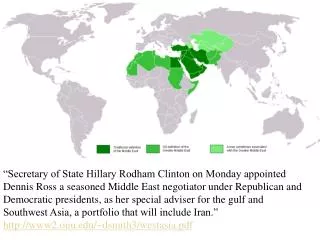
Middle East Conflict • Palestine and Israel • Disagree over homeland • Religion disputes • Jewish and Muslim • Control/Distribution of control of Jerusalem
Iran Iraq • Theocracy controlled by Ayatollah • New democracy after years of Dictator Rule Saddam Hussein Ayatollah Khomeini
North African Conflicts • 2010 Vender sets himself on fire to protest government • Lead to rebellion and removal of dictator • Lead to Libya, Egypt, and other countries resisting dictatorial rule in 2011
Syria • March 2011, rebellion broke out in Syria • as it has across North Africa • Now in a state of Civil War • Rebels – often aligned with Al – Qaeda • Government – Dictatorial Rule aligned with Russia • U.S. has accused the Syrian government of using lethal chemical weapons • It has also been suspected that the Syrian government is housing Iranian nuclear weapons