Understanding Carbohydrates in Equine Nutrition: Sources, Types, and Digestive Processes
This article explores the role of carbohydrates in equine nutrition, emphasizing their importance as a primary energy source. It categorizes carbohydrates into monosaccharides, disaccharides, oligosaccharides, and polysaccharides, discussing their digestion in the equine gastrointestinal tract. Key sources include forages, grains, and grain by-products, highlighting the variations in energy yield from different types of carbohydrates. The article also addresses the digestive processes occurring in the small intestine and the cecum, emphasizing the significance of fiber and non-structural carbohydrates in horse diets.

Understanding Carbohydrates in Equine Nutrition: Sources, Types, and Digestive Processes
E N D
Presentation Transcript
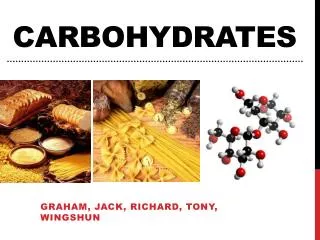
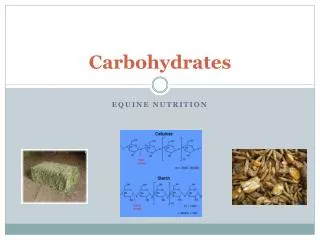
Carbohydrates Equine Nutrition
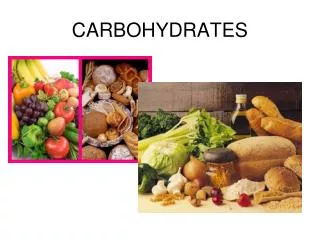
Carbohydrates • Principles sources of energy • Originate from? • Forages • Grains • Grain By-Products • All CHO’s contain similar amounts of GE • But different amounts of DE, ME, and NE • CHO’s digested and absorbed in the S.I. yield • More energy than when digested by microbial action
Carbohydrates • Categorized as? • Mono-saccharides • Di-saccharides • Oligo-saccharides • Poly-saccharides
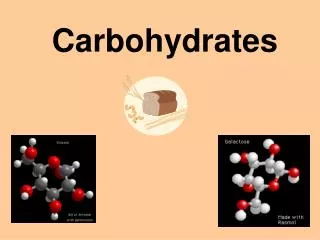
Carbohydrates • Mono-saccharidesof nutritional importance include: • GlucoseFructose Galactose • Mannose ArabinoseXylose
Monosaccharides • Free mono-saccharidesoccur in • Low concentrations in plants • Important constituents of • Oligo-saccharides • Poly-saccharides
Di-saccharides • Few of importance in equine diet • Exception: Lactose for foals • Include: • Sucrose • Glucose + Fructose • Lactose • Glucose + Galactose • Maltose • Glucose + Glucose
Oligosaccharides • Composed of short chain monosaccharides • 3 – 10 monosaccharide units • Most common: • Raffinose • Stachyose • Fructooligosacharide aka fructan • Mannoligosacharides
Polysaccharides • Contain > 10 monosaccharide units • Largest and most complex CHO’s • Most common? • Starch and Cellulose • Pectin and Hemicellulose (not as common) • Type of linkage between monosaccharide residues in oligo- and polysaccharides has a great influence on what? • Site of digestion
Carbohydrates • Hydrolysis of the α 1-4 linkage of starch can occur where? • Small Intestine • Hydrolysis of the β 1-4 linkage of cellulose and hemi-cellulose must occur where? • Cecum or colon • Microbial Fermentation
Carbohydrates • Classification on Plant CHO’s • Neutral Detergent Fiber (NDF) • Cellulose, Hemi-cellulose, and Lignin • Non-fibrous CHO’s • Aka Nonstructural CHO • Comprised of all CHO’s not found in NDF • Includes? • Mono- and disaccharides • Oligosaccharides • Starch
Carbohydrates CHO composition of feed can vary greatly Especially for forages and bi-products
Carbohydrates • Structural CHO’s are important energy sources • Microbial production of VFA’s in cecum • Up to 30% of maintenance • Additional VFA’s produced in • Colon • Principle VFA produced from fiber • Acetate • Propionate and butyrate also significant
Carbohydrates Acetate Propionate Butyrate
Carbohydrates • Acetate may be used directly for energy • If not used immediately probably used for the synthesis of • Long-chain fatty acids • May be stored • May be secreted in milk • Research has shown that mares consuming high-forage rations have • Higher milk fat percentages
Carbohydrates • Propionate may be used for • Hepatic glucose synthesis • Important in forage fed horses • Butyrate not well studied
Carbohydrates • What may affect microbial populations in the L.I.? • Diet composition • Particularly CHO composition • Proportions of VFA’s produced • What VFA is produced more in a high forage diet? • Acetate • What VFA is produced more in a high concen diet? • Propionate
Carbohydrates • Are structural CHO’s necessary in the diet? • Does the amount of fiber in the diet affect the weight of the GIT? • Why? • High fiber diets tend to hold more water • Mass of GIT may also be increased
Carbohydrates • Are non-structural CHO’s necessary in the diet? • When energy needs cannot be met by forage alone • What are non-structural CHO’s primarily made of? • Starch • Where should the majority of digestion take place? • Small Intestine
Carbohydrates • Are their differences in starch digestibilities? • Why? • Structural variation dependants on feed type • Two main components of starch • Amylose • Amylopectin
Carbohydrates • How do amylose and amylopectin differ? • Amylose • Straight chain structure of glucose units • Amylopectin • Branched chain of glucose units • Proportions in starch vary by • Cereal grain • Maturity • Variety
Amylose Amylopectin
Carbohydrates • What may reduce pre-cecal digestion of amylose and amylopectin? • Type and amount of forage • Abundance of amylase in digestive secretions • What may ↑ pre-cecal digestion of these? • Type and amount of forage • Grain Processing • Decreasing particle size • Increasing surface area
Carbohydrates • What are other factors that affect pre-cecal digestion? • Grain type • Oat starch more digestible than corn or barley • Amount of starch consumed at one time • What happens if starch is not digested in the S.I.? • Enters into L.I. and is fermented • Is this a good thing?
Carbohydrates • Starch digestion in L.I. • Lowers net energy value • No longer will be broken down to glucose • May alter microbial environment • May be good only on very poor quality forage diet • Generally bad • Could decrease concentration of cellulolytic bacteria • Decrease pH • Should avoid high starch diets
CHO Metabolism and Storage • What happens when a meal high in starch is consumed? • Blood glucose concentrations ↑ • Insulin levels ↑ • Glucose uptake to muscle and adipose • Glycemic Index • ↑ in blood glucose levels associated with substrate consumed
CHO Metabolism and Storage • What happens to glucose once it is absorbed? • May be used for immediate energy • Stored for later use • Fat synthesis • What is stored glucose referred to as? • Glycogen • Where are the main store sites? • Muscle • Liver
CHO Metabolism and Storage • Muscle glycogen can only be used for • Muscle energy • Glycogen stored in liver can be used for • Maintaining blood glucose levels • Provide glucose for other tissue • CHO’s very important in the exercising horse • Requirements ↑ as work intensity ↑