Riparian Vegetation, Riparian Degradation and Restoration
This comprehensive overview delves into riparian zones, vital ecological areas where land meets water. It highlights their significance in stream health through vegetation that controls temperatures, stabilizes banks, and provides habitat. The presentation addresses the adverse effects of land use and invasive species, particularly discussing restoration efforts such as fencing, buffer zones, and invasive plant removal, exemplified by a case study on the Sandy River habitat protection project. Join us in exploring how restoration can mitigate degradation and support river ecosystems.

Riparian Vegetation, Riparian Degradation and Restoration
E N D
Presentation Transcript
Riparian Vegetation, Riparian Degradation and Restoration Ian McBride Earth and Physical Science Department Western Oregon University Monmouth, Oregon Email: imcbride11@wou.edu
Outline • Part 1: Introduction to Riparian Zones • The pieces of a riparian zone • Importance of riparian zones • Part 2: Land Use and Invasive Species • Detrimental land use • Invasive plant species
Outline • Part 3: Restoration and Mitigation • Fencing • Buffer zones • Removal of invasive plants • Part 4: Case study • Habitat protection project, Sandy River • Summary
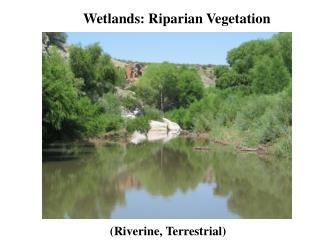
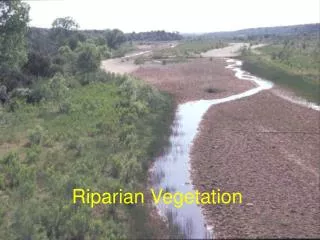
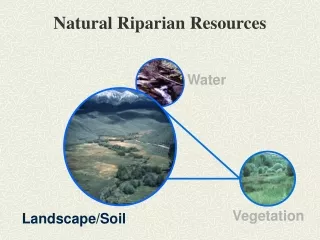
Riparian Zones • What is a riparian zone? • Where the river meets the land • Complex and sensitive system • An important biome • Two major parts
The Parts of a Riparian Zone Plants • Control stream temperature • Anchor banks Soil • Stores ground water • Filters toxin • Buffer for river
The Plants Riparian vegetation is critical to stream health • Shading • Bank stabilization • Provide habitat and nutrients
Shading Riparian canopy • Regulates water temperature • Provides leafy debris
Bank Stabilization • Combats bank erosion • Lessens sediment input
Stream temperature fluctuations in open and closed canopy environments
The Soil Acts as a buffer for: • Water • Nutrients • Toxins
Land Use • Grazing animals • Logging • Agriculture
Grazing Animal grazing poses threats to riparian health: • Bank degradation • Loss of riparian vegetation
Logging Depletes riparian vegetation: • Physical and chemical degradation • Loosens bank sediment
Agriculture: Input of harmful chemicals into river systems
Invasive Species • Out-compete native plants • Do not allow for diversity Himalayan Blackberry English Ivy
Combating Stream Degradation • Graze protection • Providing buffer zones • Removal of invasive species
Grazing • Fencing of riparian zones • Protecting young plants • Deterring grazing animals
Buffer Zones A riparian zone is a buffer against: • Water • Heat • Sediment • Nutrients • Toxins
Case Study Sandy River Riparian Habitat Protection Project Report 2006, The Nature Conservancy, Oregon Field Office
Introduction • Riparian restoration of Sandy River • 4 year span 2002-2006 • Major focus on removal of invasive plants
Scope • 395 individual microsites • Infestations of non-native invasive plants • Tens of millions of dollars • 25 years time scale
Knotweed • Non-native shrub • Extremely invasive • Rhizomal • Out-competes native species
Methods of Removal Chemical • Herbicidal spray • Herbicidal injection Physical • Cutting • Rhizome extraction
Results • Number of knotweed stems found per year
Results • Number of micro-sites with knotweed present
Results 2004 2005 2006
2004 2005 2006
2004 2005 2006
SUMMARY • Riparian vegetation is crucial to river health • Riparian zones buffer streams • Riparian zones are easily disturbed • Mitigation and restoration efforts can improve riparian health • Riparian health leads to stream health
Five-Minute River Interlude • https://www.youtube.com/watch?v=8Jq1U8JyHW4 • Youtube - Salmon Spawning