Comprehensive Clinical Phenotyping of Nephrotic Syndrome: Insights from NEPTUNE Study
The NEPTUNE study captures high-resolution clinical phenotypes over 4-6 monthly visits, including 473 parameters across 1053 data fields. Key focus areas include demographics, socio-economic status, birth and family histories, kidney disease progression, and quality of life metrics captured through patient-reported outcomes (PROMIS). This extensive dataset includes detailed histopathology using virtual microscopy and sophisticated processes for sample procurement, analyzing DNA, RNA, and serum from patients. Funded research targets gene sequencing and transcriptome analysis, advancing our understanding of nephrotic syndrome.

Comprehensive Clinical Phenotyping of Nephrotic Syndrome: Insights from NEPTUNE Study
E N D
Presentation Transcript
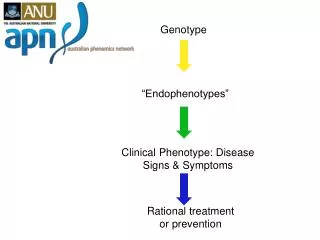
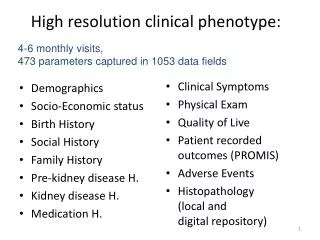
High resolution clinical phenotype: 4-6 monthly visits, 473 parameters captured in 1053 data fields • Demographics • Socio-Economic status • Birth History • Social History • Family History • Pre-kidney disease H. • Kidney disease H. • Medication H. • Clinical Symptoms • Physical Exam • Quality of Live • Patient recorded outcomes (PROMIS) • Adverse Events • Histopathology (local and digital repository)
NEPTUNE Virtual Microscopy Archive of Nephrotic Syndrome Glass slides are scanned using Aperio ScanScope OS Kidney bx slide Annotator Reader #2 Reader #1 Scoring process on annotated images Scoring process on annotated images L. Barisoni, S.Hewitt, J. Kopp Data analysis
Comprehensive Sample Procurement • DNA: • blood, kidney, urine • RNA: • Blood, kidney, urine • Serum • Plasma • EDTA, NaHep, NaCitrate • Urine • Spot / 24h • Native, NaAz, Protease In. • Urine sediment Funded: • Targeted Sequencing • GWAS • Nephron-segment specific Transcriptome • Digital Path incl. glomerular Morphometry Options to capture genome wide profiles along genotype – phenotype continuum