
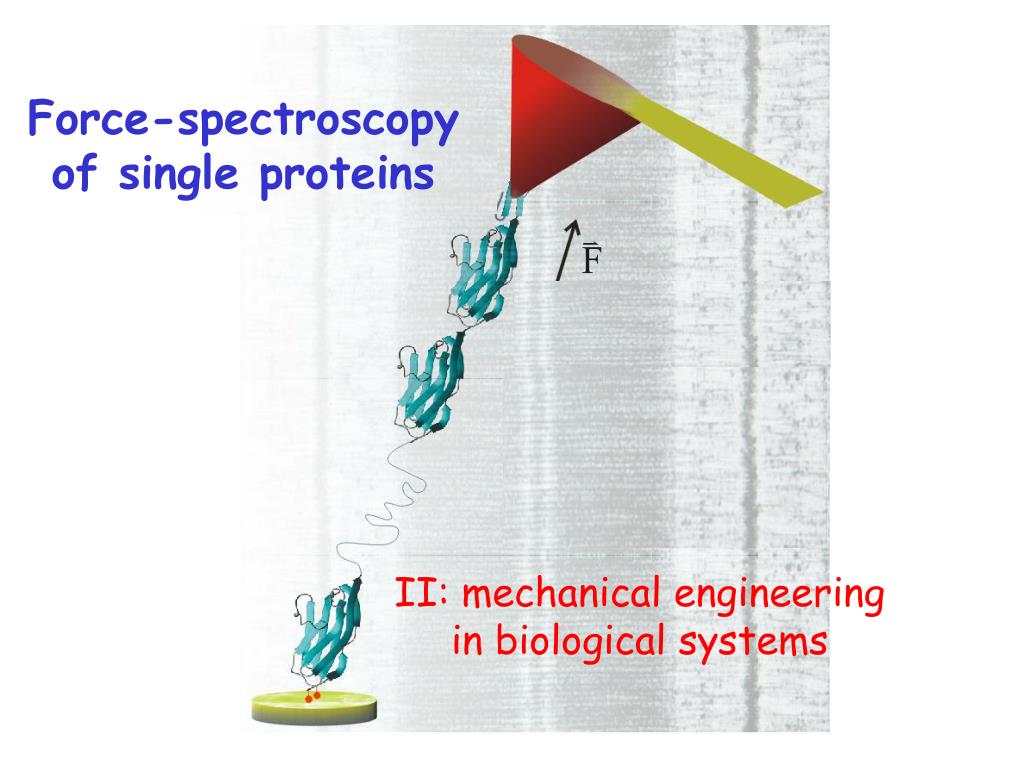
Force-spectroscopy of single proteins

This study explores the mechanics of the giant muscle protein titin using force-spectroscopy techniques. We provide a detailed analysis of titin's elasticity, examining its structural properties through electron micrographs and modeling. The research highlights the mechanical design of titin and its significance in muscle function, as well as the extracellular matrix's role in cellular activity. We also discuss the implications of creating titin phenotypes in mice and the importance of fibronectin in maintaining cell adhesion within biological systems.
Télécharger la présentation 
Politique de téléchargement : le contenu du site vous est fourni TEL QUEL pour votre information et votre usage personnel ; il ne peut être vendu, concédé sous licence ni partagé sur d’autres sites sans l’accord de son auteur.Le contenu vous est fourni TEL QUEL, pour votre information et votre usage personnel uniquement. Téléchargez la présentation en cliquant sur ce lien. Lors du téléchargement, si vous ne parvenez pas à télécharger une présentation, l’éditeur a peut-être supprimé le fichier de son serveur.Pendant le téléchargement, si vous ne parvenez pas à obtenir une présentation, le fichier a peut-être été supprimé par l’éditeur.
F I N