Advancing Software for Ecological Forecasting: Collaboration and Innovation in Data Analysis
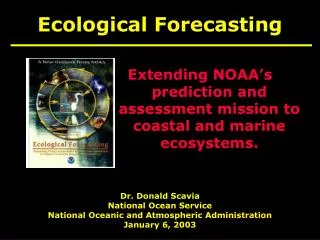
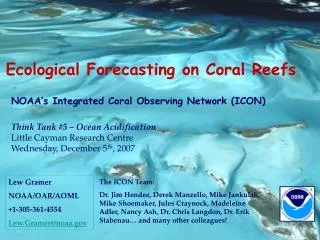
This workshop aims to enhance the state of ecological forecasting through collaboration and innovation in software development. Experts, including David LeBauer and Aaron Ellison, will share insights on inference engines and scientific workflows, addressing common challenges while identifying design principles and standards. With sessions on current projects, opportunities for integration, and lightning talks from participants, this event fosters new partnerships to make scientific data analysis faster and more effective for ecologists. Join us to envision the next generation of ecological forecasting tools.
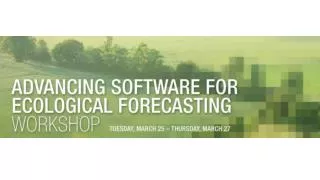

Advancing Software for Ecological Forecasting: Collaboration and Innovation in Data Analysis
E N D
Presentation Transcript
Introduction: Inference Engines Scientific Workflows Kruschke et al 2012 The time has come: Bayesian methods for data analysis in the organizational sciences. Schlesinger et al. 1979 Terminology for model credibility. Simulation.
Workshop Objectives Establish current state of our projects • Common challenges • Opportunities to collaborate, couple existing tools Foster collaborations, coupling of existing tools Identify common design principles and standards Envision next generation software Make science faster and more useful
Agenda: Today 9-10: Plenary • Welcome, David LeBauer, University of Illinois • Inference Engines, Perry de Valpine, University of California at Berkeley • Scientific Workflows, Matthew Smith, Microsoft Research, Cambridge 10-12: Lightning Talks (4 min ea.) • Scientific Workflow Projects • Inference Engine Projects 1-5 Working Groups
Agenda: Wednesday and Thursday Wednesday 9 AM Keynote: Aaron Ellison, Harvard Reaching the 99%: making statistical software relevant and useful for ecologists 10-5 Working Groups Thursday 9 AM Plenary: Matt Jones, NCEAS Looking forward: what next? 10-5 Working Groups
Sponsors NSF RCN: Forecasts Of Resource and Environmental Changes: data Assimilation Science and Technology (Yiqi Luo, PI) Additional Support: Microsoft Research Connections Institute for Genomic Biology