Igneous Rocks
Igneous Rocks Formation of Igneous Rocks Igneous comes from the Latin word ignis , which means fire Intrusive igneous rocks are formed when magma hardens beneath Earth’s surface Extrusive igneous rocks are formed when lava hardens on Earth’s surface Classification of Igneous Rocks

Igneous Rocks
E N D
Presentation Transcript
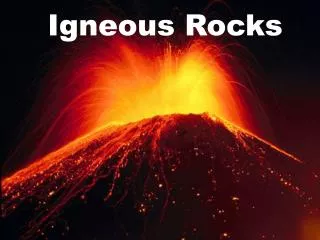
Formation of Igneous Rocks • Igneous comes from the Latin word ignis, which means fire • Intrusive igneous rocks are formed when magma hardens beneath Earth’s surface • Extrusive igneous rocks are formed when lava hardens on Earth’s surface
Classification of Igneous Rocks • Texture and composition are two characteristics used to classify igneous rocks • Texture describes the appearance of an igneous rock based on its size, shape, and arrangement of its interlocking crystals • Composition of igneous rocks are based on the proportions of light and dark minerals in the rock
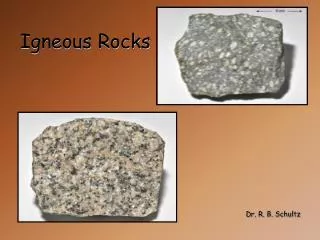
Texture • Coarse-grained texture is caused by slow cooling resulting in larger crystals • Fine-grained texture is caused by rapid cooling resulting in smaller, interconnected mineral grains Gabbro Andesite
Texture continued • Glassy texture is caused by very rapid cooling • Porphyritic texture is caused by different rates of cooling resulting in varied sized minerals Obsidian (compact glass)
Classification of Igneous Rocks • Composition of igneous rocks are based on the proportions of light and dark minerals in the rock • There are four types of composition • Granitic • Andesitic • Basaltic • Ultramafic
Igneous Rock Summary • Igneous rocks form when magma or lava cools and hardens • Intrusive rocks form from magma deep within Earth • Extrusive rocks form from lava at Earth’s surface • Igneous rocks can be classified according to texture and composition