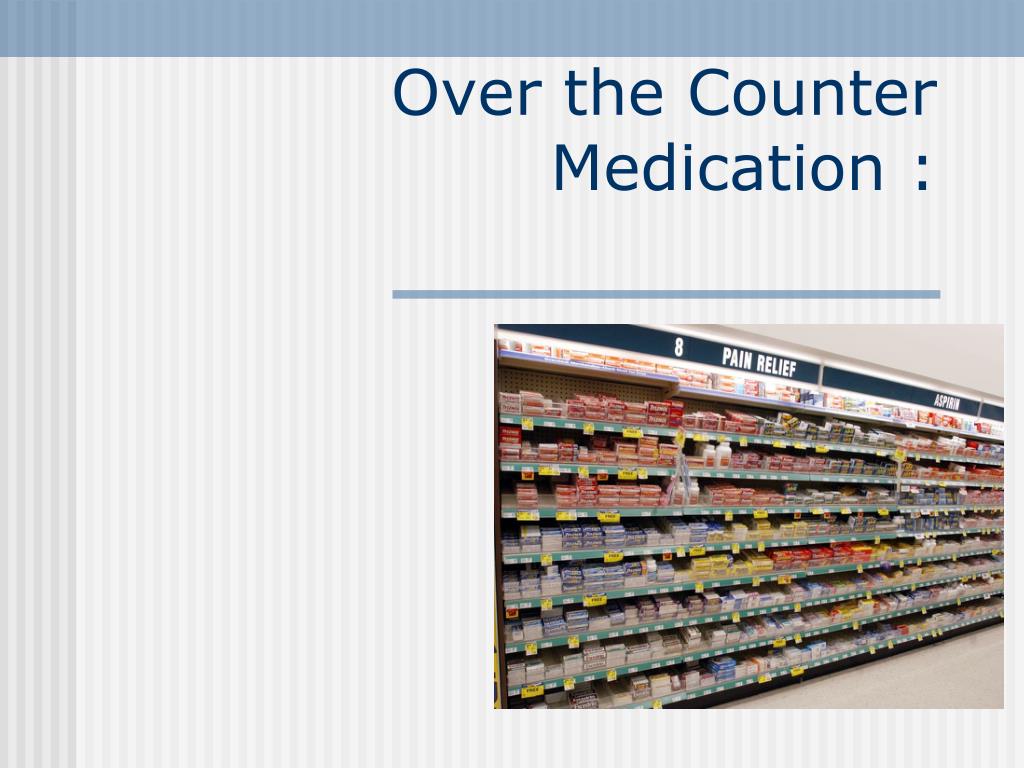
Over the Counter Medication :
Overview of OTC Medications (Harris Survey) • > 100,000 OTC Products • Few unique active ingredients • > 700 are former Rx meds
Some Interesting OTC Facts: • 3/5 people have used an OTC medication in the last 6 months • This is slightly more than who used an Rx medication in the last 6 months
Basic Points: • Medication v. Drug • MOST medications can cause • Nausea • Vomiting • Diarrhea • Dizziness • Drowsiness
Interesting Facts and OTC Problems: • People don’t consider OTC’s real medicine. • People just don’t know what is in these medications, and many contain the same active ingredients. • Only 34% of consumers could identify the active ingredient in the medicine they were taking.
OTC Medication Use by Category: • Most common uses include: • Pain (78%) • Cough, cold, flu (52%) • Allergy and sinus (45%) • Heartburn, stomach (37%) • Constipation, diarrhea (21%) • Skin problems (10%)
For Example: • Pain • Most common ingredients: • Acetaminophen (Tylenol aka, APAP) • Aspirin (Many) • Ibuprofen (Motrin IB, Advil) • Naproxen (Aleve) and ketoprofen (Orudis) • Caffeine • Buffers, coatings, long acting, strongest pain reliever you can buy without a prescription….
OTC Medication Use: Some specific recommendations and considerations
OTC Medication
Pain • Acetaminophen (apap) • first line treatment in those < 18 • Generally causes few problems • Is very safe to use • Aspirin • should be avoided in the under 18 age group • Reye’s syndrome • Other problems usually associated with stomach distress (NVD)
Pain • Ibuprofen • Fine to use in the <18 age group • Works about as well as apap • Caution if kids are dehydrated • Sometimes used in combo with APAP • Dizziness, plus stomach problems • CAUTION • Aspirin / ibuprofen allergies a concern, in some cases you are seeing students after their first dose of a medication! • Hives, shortness of breath, facial swelling, difficulty breathing or swallowing, itching, feeling funny • Seek medical assistance immediately
Ibuprofen
Cough, Cold and Flu, Allergy and Sinus • Decongestants (stuffy) • Pseudoephedrine (Sudafed) • PPA removed from the market, others include phenylepherine, and some nasal sprays (Afrin) • Have been associated with hallucinations, hypertension, irritability and hyperactivity • Can also cause drowsiness, especially as as the dose wears off • Products are available for very young children, but dosing is critical, so use pediatric dosage forms and measure carefully
Cough, Cold and Flu, Allergy and Sinus • Antihistamines (runny) • Claritin, Alavert (loratidine) Diphenhydramine (Benadryl), chlor and brompheniramine (Chlortrimeton, Dimetapp) • Alone, usually cause drowsiness • In combination, variable effects • NLD – 1:05 AM • Kids need plenty of fluids when taking these, helps with drowsiness and dry mouth, PLUS MORE
Antihistamines - OTC
Cough • Cough suppressants • DM = dextromethorophan • Drowsiness, dizziness, NV • Codeine • Have to sign for OTC use • Not recommended for infants • Small or young children, can be used with caution • Expectorants • Guiafenesin (basic ingredient in most) • Usually no problem, need to use with water, works about as well as water in OTC doses. • No, water probably works better…
Anti cough agents
Combination Products • are very popular because they have many choices • Plain, DM, CF, PE, Orange, Grape • These products may contain • Antihistamines • Decongestants • Cough suppressants • Expectorants
Combination Products
Heartburn, Stomach, Gas • Antacids – many, many • Maalox, Riopan, Gaviscon, and plenty more • Tagament, Zantac, Pepcid, etc. • Gas • Simethicone • Breaks up the gas bubbles so they can be expelled and not cause pain. These products do not reduce the amount of gas! • Gas X • Mylicon • Many generics available
Ask Your Pharmacist!
10 Tips on OTC use • Read the label • Treat only the symptoms you have • Know what to avoid while taking OTCs – beware of interactions • ASK before you buy • Use as directed on the label • Be careful if you take > 1 OTC • Don’t mix Rx and OTCs including herbals • Give your doctor a list of ALL meds • For kids, use pediatric formulas • Throw meds away if they are expired
Keep in mind: • If patient takes OTC meds, more than 1 medication, Rx and OTC meds, and something seems out of character, it could be the cause of adverse reaction. • These kinds of problems need to be brought to the attention of a health professional.