Engaging 6th Grade Science: Discovering the Rock Cycle Through Movement and Dance
In this interactive 6th-grade science lesson, students explore the rock cycle's formation processes, focusing on igneous, sedimentary, and metamorphic rocks. Through creative movement, catchy songs, and engaging dance, they learn the distinctions between weathering, erosion, and deposition. The “Rock Cycle” and “Weathering” songs incorporate rhythmic chants and movements that make learning fun and memorable. Students physically embody the concepts by using hand gestures and dance to visualize geological processes, deepening their understanding of Earth science.

Engaging 6th Grade Science: Discovering the Rock Cycle Through Movement and Dance
E N D
Presentation Transcript
tara.copas@monroe.kyschools.us - --6th grade science - T.Copas/N.Holder- Students learn the formation processes of the three main categories of rocks in the rock cycle through movement, song, and dance. They also learn the differences in weathering, erosion, and deposition through the "Weathering" song and dance movements.
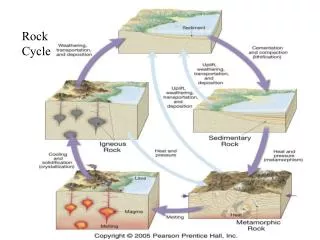
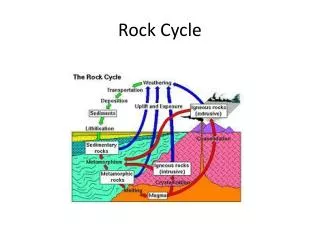
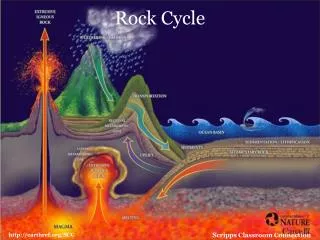
Rock cycle song • Magma rises to form igneous rock • It breaks down by weathering and erosion • It washes away by wind and water, it washes away by wind and water • It compacts and cements, it compacts and cements • To form sedimentary rock, to form sedimentary rock • It goes under heat and pressure, heat and pressure • To form metamorphic rock, to form metamorphic rock
Weathering song • "Wea-ther-ing! (pause) Ero-sion! (pause) De-po-si-tion!" repeatedly. For weathering, students will stick out three fingers on each hand to form W's. Rhythmically, they will slam their W's together to represent the breaking of rocks. During the erosion portion of the chant, instruct students to move their hands in a sideways wave motion, similar to a hula dancer. If your classroom has enough room, allow students to slide sideways to model the movement of erosion. Finally, when students chant "De-po-si-tion," they should make a downward motion with their hands and kneel to the ground, showing how particles eventually deposit or stop.