

SlideServe
Menu
Préférences
© SlideServe · v2026

OBESITY

ayla avatar
12 diapositives · 643 Views · Jul 27, 2014

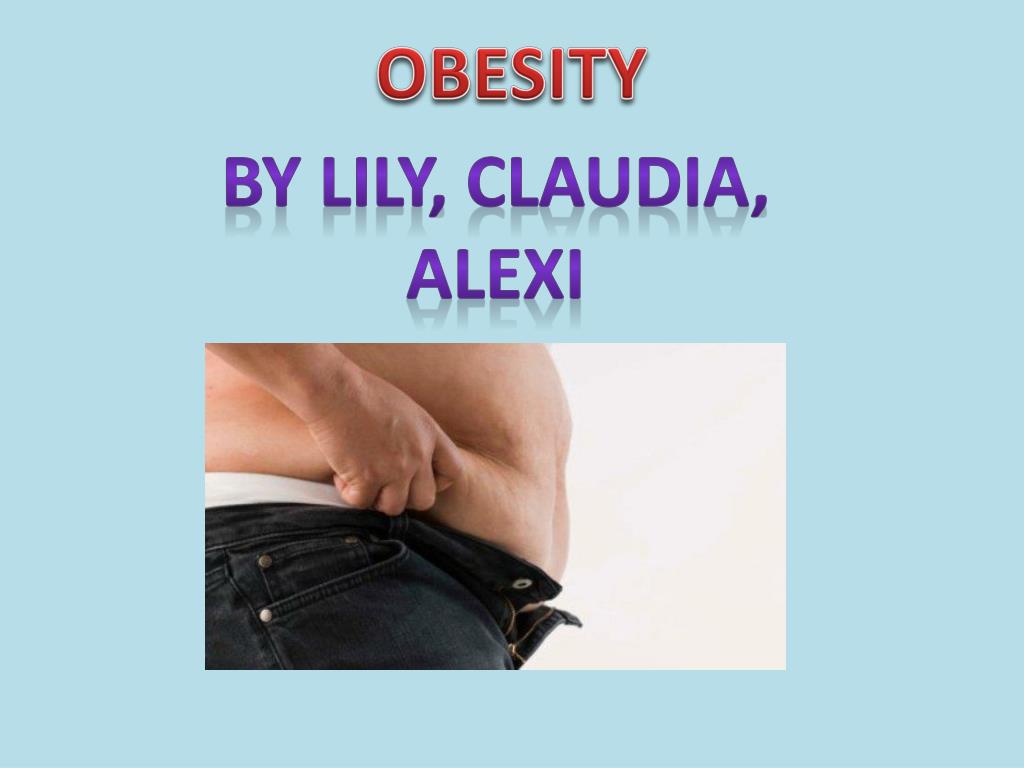
OBESITY. BY LILY, CLAUDIA, ALEXI. What is Obesity?. Obesity is defined as having a body mass index of over 30 or a waist measurement of more then 89 cm in woman and 102 in men. The rate of obesity has been increasing over time in Australia. . Causes of Obesity.
OBESITY - slide 1
01 / 12OBESITY
1 / 17

Télécharger la présentation

OBESITY
Une image / un lien ci-dessous est fourni (tel quel) pour télécharger la présentation

Politique de téléchargement : le contenu du site vous est fourni TEL QUEL pour votre information et votre usage personnel ; il ne peut être vendu, concédé sous licence ni partagé sur d’autres sites sans l’accord de son auteur.Le contenu vous est fourni TEL QUEL, pour votre information et votre usage personnel uniquement. Téléchargez la présentation en cliquant sur ce lien. Lors du téléchargement, si vous ne parvenez pas à télécharger une présentation, l’éditeur a peut-être supprimé le fichier de son serveur.Pendant le téléchargement, si vous ne parvenez pas à obtenir une présentation, le fichier a peut-être été supprimé par l’éditeur.

F I N

Plus de contenu associé

Transcription de la présentation
  1. OBESITY BY LILY, CLAUDIA, ALEXI

  2. What is Obesity? • Obesity is defined as having a body mass index of over 30 or a waist measurement of more then 89 cm in woman and 102 in men. The rate of obesity has been increasing over time in Australia.

  3. Causes of Obesity • Causes of obesity are often linked to eating more energy dense foods without undertaking enough exercise to burn the excess however in some cases obesity is caused by metabolic problems rather than behavioural determinants.

  4. Why is obesity an NHPA? • It’s relationship to other conditions. Obesity is a key biological determinant in a range of diseases and conditions including cardiovascular disease, diabetes, arthritis and kidney disease. The proportion of obese adults has doubled between 1990 and 2009 and it was responsible for 7.6% of the total burden of disease in 2003.

  5. Biological risk factors • As people age metabolism slows down and its harder to maintain weight. • People may have a predisposition of obesity. • Hormonal disturbances such as leptin contribute to apatite and fat distribution.

  6. Behavioural risk factors • Lack of physical activity- less energy is burnt which increases weight gain • Excessive alcohol consumption- alcohol contains energy which means it can increase the chance of weight gain • Consuming a energy dense diet- foods containing large amounts of fat can contribute significantly to weight gain.

  7. Social risk factors • Socioeconomic status (SES)- people of a low SES are more likely to be obese due to lower levels of physical activity • Work and jobs- people who are active as part of their jobs use more energy then people who work in passive occupations • Food security- higher rates of obesity for people who can’t afford or access food

  8. Health promotion strategies • Swap it- a federal government campaign aims to raise awareness of healthy behaviours by showing people how they can achieve significant health gains by making small changes to their daily routine. They use advertising campaigns a 12 week planner and they have an iPhone app. • http://www.youtube.com/watch?v=98P_Jk5IZJw • http://www.youtube.com/watch?v=FG8IAxHqtFo

  9. Health promotion strategies • Measure up- The Measure Up campaign was part of the Australian Better Health Initiative (ABHI, funded from 2006-2010), a national program, supported by the Australian and state and territory governments, which aimed to reduce the risk factors for chronic disease such as some cancers, heart disease, and type 2 diabetes. • http://www.youtube.com/watch?v=UWTlHqca5AM

  10. Direct Costs • Obesity presents conditions such as cardio vascular disease and type 2 diabetes as a result many of the direct costs associated with obesity are attributed to other conditions for example a person may suffer a heart attack and require an ambulance. Other costs can include weight management plans and medication.

  11. Indirect Costs • Indirect costs to the individual can be substantial if obesity relates conditions develop the person may not be able to work which reduces income.

  12. Intangible Costs • The effects on mental health – individuals who are obese maybe feel self conscious there appearance which can result in reduced self esteem. • As energy levels decrease, house hold tasks and chores become increasingly difficult for people who are obese.