Understanding Class I Cytokine Receptors: Structures, Interactions, and Signaling Mechanisms
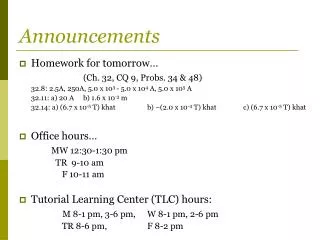
This assignment focuses on Class I cytokine receptors, their structural components, and the mechanisms by which they mediate cell signaling. Students are required to conduct a literature search to find at least one review article and two peer-reviewed research articles on the topic. The importance of cytokine binding, subunit sharing, and the role of tyrosine kinases and STAT proteins in signal transduction will be explored. A reference list of the obtained papers is due by February 4th, contributing to a 10-point quiz grade.

Understanding Class I Cytokine Receptors: Structures, Interactions, and Signaling Mechanisms
E N D
Presentation Transcript
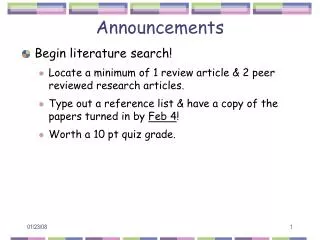
Announcements • Begin literature search! • Locate a minimum of 1 review article & 2 peer reviewed research articles. • Type out a reference list & have a copy of the papers turned in by Feb 4! • Worth a 10 pt quiz grade.
Class I cytokine receptors: A model for cytokine receptor interactions.
Composed of 2 or 3 polypeptide chains (subunits) @ least 1 cytokine binding subunit @least 1 signal transducing subunit Conserved AA seq motifs: 4 cysteine residues WSXWS On one or both subunits
Fig. 12-7: Unique subunit responsible for cell signaling
Fig. 12-8, p. 310 Sharing the signal-transduction subunit may lead to competition & antagonism:
All share the same beta ST subunit! Sharing of multiple subunits can explain redundancy:
Cells expressing different receptor subunits may lead to low or high affinity receptors that modulate responses.
IL2 Receptor: b chain g chain a chain- only expressed on activated T cells. Required for signal transduction
Multisubunit receptors allows for possible differences in how different cell types respond to a cytokine.
Neurotransmitters Chemokine receptors - Class I receptors - Class II receptors Overview of Cell Signal Transduction Has enzymatic activity or interacts with a protein that has the enzymatic activity
Signal Transductions often involves phosphorylation: • Kinase- enzyme that places phosphate groups on proteins. • Tyrosine kinase-* • Serine-threonine kinase- • Histidine kinase • Either receptor is a kinase OR associates with one. • Phosphatase- enzyme that removes phosphates • Regulatory- OFF
Janus Kinase Family (JAKs): “2 heads”- 2 symmetrical kinase domains. Cytoplasmic tyrosine kinases Associate with cytoplasmic tails of the receptors. Function- Cytokine signal transduction depends upon a cytoplasmic protein tyrosine kinase:
STATs- Signal Transducer & Activator of Txn: Contain SH2 domains: Binds phosphorylated tyr. Permits dimer formation. Activated dimers function as txn activators (DNA binding domain). Who are the activated Transcription Factors?
SH2 domains creates a hole so that the tyr-P from other proteins can plug in! SH2 domain
http://binfo.ym.edu.tw/mb/images/stat_dimer.gif Model applies to other cytokine receptors: (IL2)
1. Use of individual receptors or different subfamily of receptors. 2. There are different STAT proteins & different JAKs. Recognize different genes! 3. Same STATs may recognize different genes in different cell types. How do cytokines mediate specific results in different cell types?
KELSO, ANNECytokines: Principles and prospects.Immunology and Cell Biology 76 (4), 300-317.