Download
1 / 12
120 likes | 228 Vues
The Protestant Reformation, ignited by Martin Luther in 1517, emerged as a response to rampant church corruption and the sale of indulgences. Humanism and the Northern Renaissance encouraged critical examination of religious practices, leading to significant theological shifts. Luther's 95 Theses challenged papal authority, asserting salvation through faith alone and advocating for equal access to God and scripture. The Reformation sparked widespread upheaval, resulting in the formation of Protestant denominations and social revolts. Key reformers like John Calvin further shaped religious thought, emphasizing predestination.

E N D
Start of Upheaval • Unequal wealth in Italy during the Renaissance • Humanism appealed to the poor – especially idea of social reform • Daily life still heavily influenced by church • Humanism encouraged people to question the church
Church Corruption • Church has become more secular • Fought for political power • Wars to protect and gain land • Lived lavish lifestyles – Patrons of the arts • Increased fees for marriages, baptisms, sold indulgences • Previously indulgences were only granted for good deeds – Now they could be bought
Call for Change • Northern Renaissance – Erasmus stressed Bible study and rejected secular nature of church • 1300s Wycliffe and Hus led reform
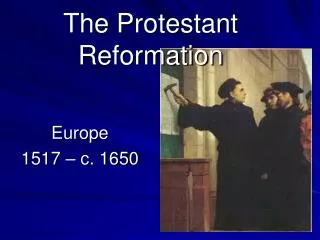
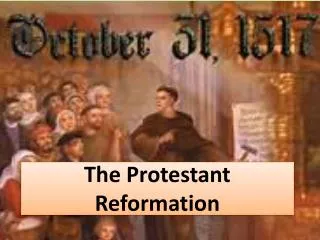
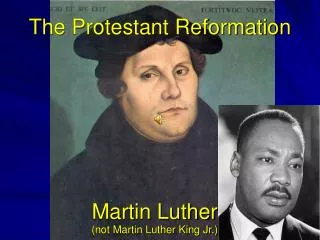
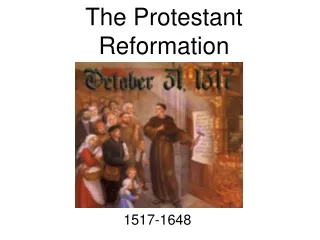
Martin Luther • Very devout follower • Upset with corruption • Wittenberg in 1517 – Indulgences available for anyone that donated money to rebuilding of the Cathedral of St. Peter in Rome. (St. Peter’s Basilica)
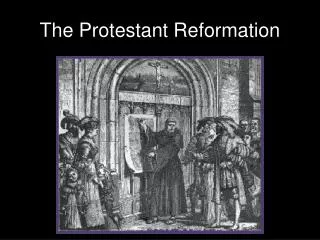
95 Theses • Luther’s arguments against indulgences • No basis for indulgences in Bible • Pope does not have authority to release souls from purgatory • Sola Fides (Salvation Through Faith Alone) Other Problems with the Church • All Christians equal access to God through faith and the Bible • School in each town to teach children to read Bible
95 Theses Continued • Banned Indulgences, Confessions, Pilgrimages and Prayers to Saints • Allowed clergy to marry
Spread of Luther’s Ideas • Printing Press quickly spread ideas through Germany and Scandinavia • Church asks Luther to recant (take back) • Luther responds with more radical changes • Rejected authority of the Pope (Rome) • Church can only be reformed through secular means
Results • Luther excommunicated in 1521 (Pope Leo X) • Diet of Worms – Told to give up writings by Charles V • Luther declared an outlaw • Followers “Protest” Papal Authority – Protestants • Some German princes agreed because it decreased power of Emperor and Pope
Results • Peasants Revolt • Luther denounced revolt – for social order • Revolt crushed but ideas spread • Peace of Augsburg • Allowed German princes to decided which religion – Lutheran (Protestant) or Catholic would be followed • North chose Lutheran; South choose Catholic
John Calvin • From France • Priest and lawyer • Predestination – World divided into sinners and saints • Live like saints because only those that were saved could live truly Christian lives
Calvinists • Chosen people entrusted by God • 1500s Calvinism in Germany, France, Netherlands, England and Scotland • Opposed by Catholics and Lutherans