Crafting Compelling Introductions for Academic Research: Engaging Reviewers Effectively
This guide delves into the essential components of writing an engaging introduction for academic research. It addresses common pitfalls that lead to reviewer disinterest, such as a lack of motivation, focus, and overpromising. Learn how to captivate your audience by articulating a clear research question, highlighting its significance, and establishing what is already known in the field. Additionally, discover strategies to position your study as a valuable contribution that addresses unresolved issues or gaps in current knowledge, ultimately advancing scholarly discourse.

Crafting Compelling Introductions for Academic Research: Engaging Reviewers Effectively
E N D
Presentation Transcript
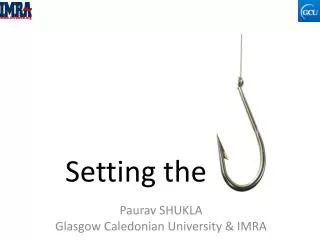
Setting the Paurav SHUKLA Glasgow Caledonian University & IMRA
The difference between… Reviewers are: Not excited after reading your introduction • Reviewers are: • Intrigued by your research question • Appreciate its importance • Understand how the study advances understanding of the topic Grant, A. M. & Pollock, T. G. (2011), Publishing in AMJ, Academy of Management Journal, 54 (5), 873-879.
How to set the hook? Why is the topic or research question interesting and important in theory and practice?
How to set the hook? What do we know? What key theoretical perspectives and empirical findings have already informed the topic or question? What we don’t know? What major, unaddressed puzzle, controversy, or paradox does this study address, and why does it need to be addressed?
How to set the hook? What will we learn? How does your study change, challenge, or advance scholars’ understanding?
Common mistakes in introductions • Failing to motivate and problematize • Lack of focus • Overpromising