Carbohydrates: The Essential Energy Source for Your Body
270 likes | 368 Vues
Understand the vital role of carbohydrates in your diet, from providing energy to aiding in fat breakdown and digestion. Learn how your body utilizes carbs, the benefits of fiber, and guidelines for meeting carbohydrate needs effectively.


Carbohydrates: The Essential Energy Source for Your Body
E N D
Presentation Transcript
Carbohydrates The Preferred Body Fuel
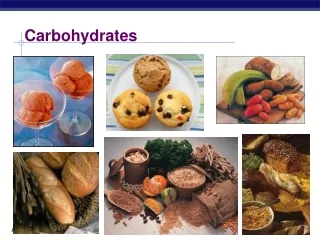
Carbohydrates • 1 of 6 essential nutrients • Main source of the body’s energy • Sugars, starches, and fibers • Made of carbon, hydrogen, and oxygen • 4 calories of energy per gram • Basic sugar unit – saccharide
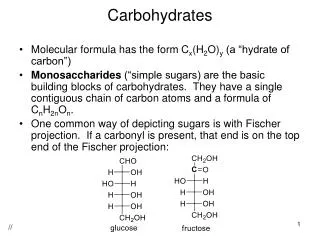
Monosaccharides – Simple Carb • Single sugar unit (aka “simple sugars”) • Smallest carbohydrate unit • Glucose – blood sugar – body’s source of energy • Fructose – found in fruit • Galactose – found in milk bonded to glucose
Disaccharides – Simple Carb • 2 sugar units bonded together • Broken down to monosaccharides during digestion • Sucrose – table sugar (glucose + fructose) • Lactose – milk sugar (glucose + galactose) • Maltose – starch digestion and grains (glucose + glucose)
Polysaccharides – Complex Carbs • Many sugar units bonded together • Broken down to monosaccharides during digestion • Starch – grains and starchy veggies • Fiber – plant walls *Carbs In Action
Functions of Carbs • Provide energy • Spare proteins • Assist in breakdown of fat • Provide bulk in diet
Energy Production • Carbohydrates are used most efficiently in the body for energy, so they are the preferred source of energy • If carb intake is insufficient, the body will draw on proteins for energy
Protein Sparing • Body can draw on proteins for energy, but it is less efficient when it does this • Proteins are harder to break down, taking more energy • The break down of proteins creates more waste • By using carbohydrates, the body leaves proteins for building and maintaining cell structures
Breaks Down Fats • Helps to completely break down fats • Without it the body can’t break down fats completely, which leads to ketosis (an increase in blood acidity, which causes cell and organ damage)
Provides Bulk in Diet • Bulk in your diet makes digestion and elimination more effective • Fiber acts like a sponge and absorbs excess water and toxins, making elimination easier • Bulk in your diet makes you feel fuller longer
Added Benefits of Fiber • Reduces incidence of G.I. diseases, such as colon cancer, as well as appendicitis, heart disease, and diabetes mellitus • Soluble fibers – dissolve in water and help to lower blood cholesterol levels (bile is involved) • Insoluble fibers – do not dissolve in water and help to reduce cancer risks (less time for toxin exposure) *Illustrate functions
How Your Body Uses Carbs • Broken down in digestive tract to monosaccharides • Monosaccharides pass through the intestine into the bloodstream and on to the liver, where sucrose and galactose are converted to glucose • When the amount of glucose in the blood rises, the body releases insulin from the pancreas
Insulin • Insulin helps trigger body cells to burn glucose for energy, thereby reducing the amount of glucose in the body (reducing blood sugar levels) • Insulin also causes muscles and the liver to store glucose not used as energy
Glycogen • Glycogen is the body’s storage form of glucose • If cells do not have an immediate need for the glucose they took from the bloodstream, they convert it to glycogen to be used later • Glycogen is stored in the muscles (2/3) and in the liver (1/3) • Glycogen in the muscles is converted back into glucose when energy is needed
Liver Storage of Glycogen • The liver only stores a limited supply of glycogen • If more carbs are eaten than the liver can convert to glycogen and store, the excess is converted to fat and stored in fatty tissue in the body • Fat stored cannot be converted back into glucose • *Using Carbs
Meeting Carbohydrate Needs • Make sure to get a limited amount of simple carbs and a higher amount of complex carbs • Naturally occurring sugars are usually accompanied by other nutrients so they are not as much of a concern • Refined sugars are a concern • Carbohydrate sweeteners that are separated from their natural sources and used as food additives
“Bad” Carbohydrates • Guess what the primary source of sugar is for teenagers? • Candy, pastries, and other sweets round out the typical teenage diet • Hidden sources include sugary cereals, yogurt, and fruit drinks
Fruit or Not? • - 5% fruit juice • - 0% fruit juice (42 sugar cubes) • - 3% fruit juice • - 25% fruit juice • - 15% fruit juice
Not So Much! • - 5% fruit juice • - 0% fruit juice (42 sugar cubes) • - 3% fruit juice • - 25% fruit juice • - 15% fruit juice
Starches & Fiber • Starches - the preferred fuel source for your body • Body burns starches efficiently, they make you feel full (satiated), and they carry many other vitamins and minerals • Fiber – gotten through whole-grain foods, vegetables, fruits, and dried beans • Increasing fiber in a diet should be done slowly to allow your digestive system to adapt • *Meeting Carb Needs
Are Starchy Foods Fattening? • Anything in excess can cause weight gain • Starchy foods are usually not the fattening culprit…it is usually the sauces and toppings served with them that adds the pounds
Is Sugar Bad for Your Teeth? • Sugar and starched feed the bacteria that live in the mouth; the byproduct of that is plaque, which sticks to the teeth • As the bacteria grow, they produce acid that eats into tooth enamel and causes cavities • Best to avoid sticky carb snacks between meals (e.g. raisins) and to always brush after eating anything
Does Sugar Cause Hyperactivity? • No studies have proven that this is true • Sugars do give you immediate energy, which can seem like hyperactivity when a lot is taken in • The bigger danger here is that kids who take in lots of sugar are missing out on necessary nutrients found in healthier foods
Is Sugar Addictive? • Studies show that people prefer sweet tastes • No studies show that there is an addictive component to sugar though…it is more of a preference than an addiction
Will Too Much Sugar Cause Diabetes? • Short answer – no • Underproduction of insulin, not a case of too much sugar • Long answer – too much sugar can exacerbate symptoms and condition, but will not cause diabetes to develop in the first place • *Carb Headlines
What is Hypoglycemia? • Low blood glucose level • Makes you feel tired and sluggish • Over production of insulin • Spread sugar out over the day to avoid a sudden sharp spike in blood sugar and insulin
What is Lactose Intolerance? • An inability to digest lactose, which is found in milk • Due to absence of lactase, which is the enzyme that breaks down lactose • Have to find other options for getting the milk you need • Alternate ways to get dairy