Fungi
Fungi are heterotrophic organisms that obtain nutrients through two primary methods: enzymatic digestion of external organic material and parasitic haustoria that extract nutrients directly from host cells. Thriving in moist, cool environments, fungi consist of hyphae that form mycelium. They reproduce asexually via fragmentation and budding or sexually through spore production. Types of fungi include imperfect fungi (Deuteromycota), which have no observable sexual reproduction, and notable relationships like lichen (fungi and algae partnership) and mycorrhizae (fungi assisting plant root systems).


Fungi
E N D
Presentation Transcript
General Characteristics • Heterotrophic- can get nutrition 2 ways 1. Produce an enzyme that digests organic material outside of the fungus. Then fungus absorbs the liquidated nutrients 2. Produce Haustoria- hyphae penetrate the host cell and suck up the nutrients directly form the host- doesn’t kill the host cell, just feed off it. (Parasitic) • Decomposers-saprobe • Live in moist ,cool environments
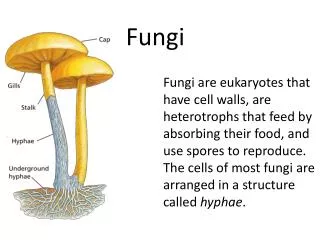
Basic Structure • Hyphae • Group of Hyphae- called a mycellium
Reproduction-2 ways • Asexually- a. through FRAGMENTATION where a piece breaks off and grows b. BUDDING- yeast pinch off a piece and become 2 cells
4 Types of Fungi • Imperfect: no observable sexual reproduction Deuteromycota: penicillin
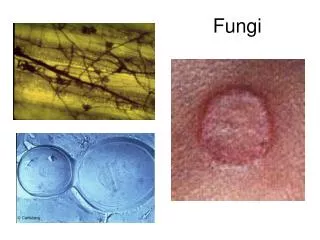
Diseases Plant • Mildew • Wheat rust Animal • Athletes foot • Candida albicans • Ringworm
Lichen • Special relationship between a fungi and algae • Mutualistic relationship • Fungi provides safe place to live • Algae provides food through photosynthesis
Mycorrhizae • Mutualistic relationship with plant • Fungi grow on roots of plants • Fungi help increase the surface area at the roots so plants can absorb more water