Propaganda
110 likes | 256 Vues
This overview delves into various techniques of propaganda used to influence public perception and behavior. From name calling and glittering generalities to testimonials and emotional appeals, these strategies aim to shape opinions by manipulating truth and emotions. We explore tactics like bandwagon, card stacking, and snob appeal, examining how they exploit social dynamics and desires. Discover how repetition reinforces messages, making them resonate with audiences. Understanding these techniques is crucial for discerning information in today's media-saturated environment.


Propaganda
E N D
Presentation Transcript
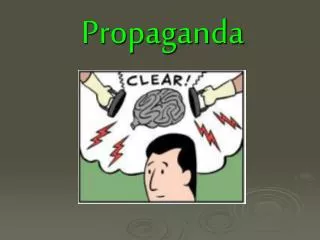
Propaganda Propaganda is the spreading of ideas, information or rumor for the purpose of helping or injuring a cause. It is a way of trying to change peoples ideas and behaviors by twisting the truth.
Name Calling Name calling is using labels instead of discussing the available information.
Glittering Generalities Glittering generalities are vague phrases that promise much.
Transfer Transfer is linking a known personal goal or idea with a product or cause in order to transfer the audience’s positive feelings to the product of cause.
Testimonial Testimonial is getting some prominent person to endorse the idea or product.
Plain Folks Plain folks is pretending to be “one of the folks” to win the regard to the general public.
Bandwagon Bandwagon is claiming that “everyone is doing it”.
Card stacking is presenting only the parts of the facts that favor one side. Card Stacking
Snob Appeal Snob appeal is trying to convince you that if you agree with them or purchase a certain product, you will be better than other people or that product will help you gain status.
Emotional Appeal Emotional appeal is using emotionally laden pictures or words to influence your opinion.
Repetition Repetition is repeating the name of the product over and over.