Understanding Earth's Energy Balance: Surplus and Deficit Dynamics
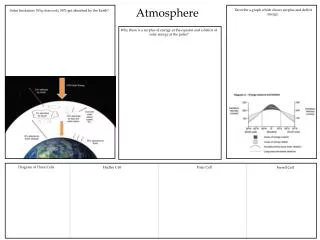
This comprehensive analysis explores the Earth's energy balance, focusing on the surplus and deficit of solar energy. A graph illustrates how only 50% of solar insolation is absorbed by the Earth, leading to excess energy at the equator and a deficit at the poles. Additionally, we examine the dynamics of Hadley, Polar, and Ferrell cells, along with the characteristics of Tropical maritime and continental air masses. The role of ocean currents in maintaining global energy balance and the historical changes in global temperatures are discussed, alongside human and physical contributors to climate change and the implications of global warming.

Understanding Earth's Energy Balance: Surplus and Deficit Dynamics
E N D
Presentation Transcript
Atmosphere Describe a graph which shows surplus and deficit energy. Solar Insolation: Why does only 50% get absorbed by the Earth? Why there is a surplus of energy at the equator and a deficit of solar energy at the poles? Diagram of Three Cells Hadley Cell Polar Cell Ferrell Cell
ITCZ origin, nature and characteristics of the Tropical maritime and Tropical continental air masses. Be able to describe the pattern of Ocean Currents and explain how they help to maintain the global energy balance. Describe the changes in global temperature over time. HINT: This could be any style of graph. You must read the axis carefully! Human and Physical Causes of Climate Change Consequences of Global Warming